Plumbing Contractor vs. Plumber: Who to Call for Your Job
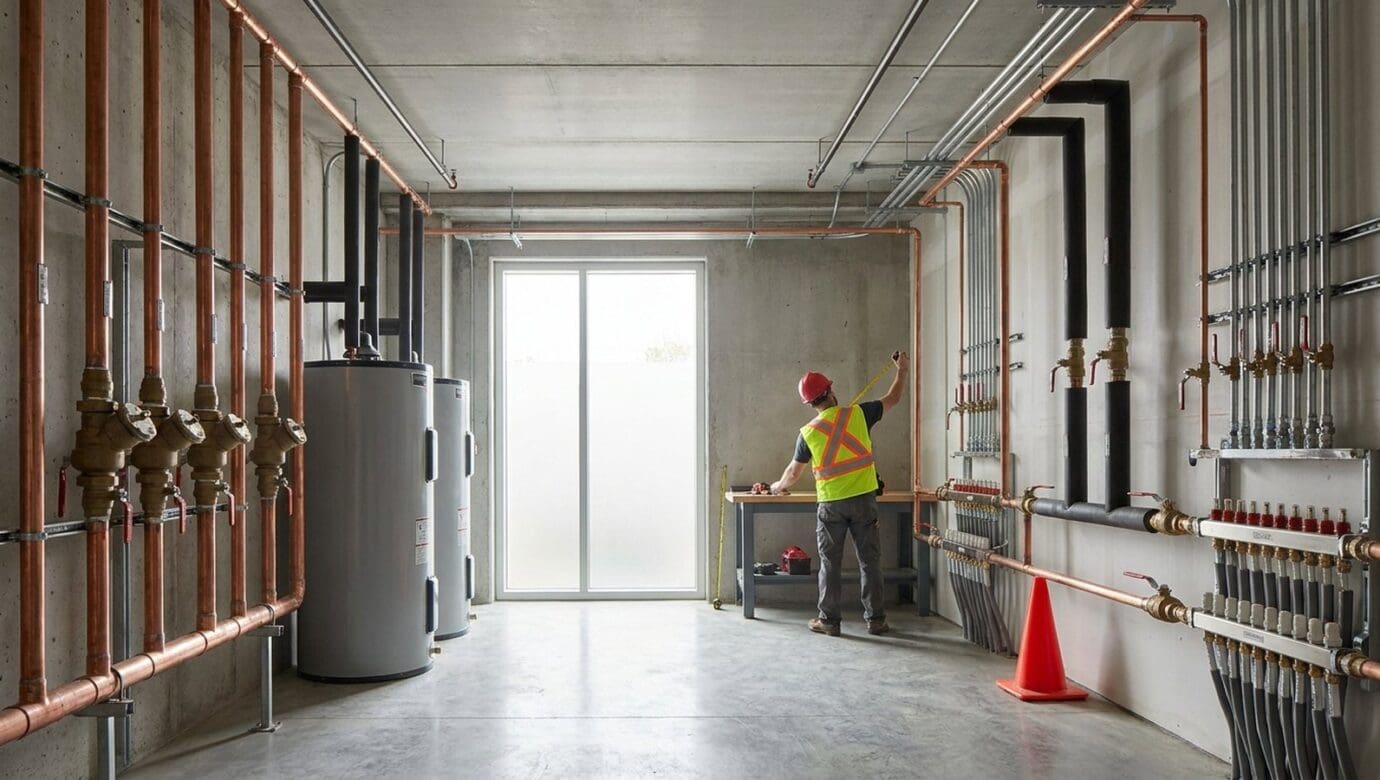
A plumber is a licensed tradesperson who installs and repairs plumbing. A plumbing contractor is the licensed business that signs the contract, pulls the permit, carries the bond and the insurance, and puts a crew of plumbers on your building against a schedule. If the job needs a permit, a submittal, or coordination with another trade, you need the contractor. If it is a leaking faucet in a break room, you need the plumber.
This guide is for plant managers, facility directors, school business officials, hospital facilities teams, and general contractors in Northern Ohio deciding which one belongs on the purchase order.
Key takeaways
- A plumber holds a trade credential. A plumbing contractor holds a business license, the permit, the bond, the insurance, and the warranty obligation.
- In Ohio, commercial plumbing contractors are licensed through the Ohio Construction Industry Licensing Board, and local building departments certified by the Ohio Board of Building Standards review and inspect the work.
- Five triggers move a job from plumber to contractor: a permit, another trade, a dated schedule, an occupied building, or a system regulated beyond the plumbing code.
- Medical gas, process piping, and backflow prevention each carry their own compliance regime, and none of them transfer automatically from general plumbing skill.
- Verify the license, the certificate of insurance, and Ohio Bureau of Workers’ Compensation coverage before the bid, not after the award.
What is the difference between a plumber and a plumbing contractor?
A plumber holds a trade credential. A plumbing contractor holds a business license plus the legal responsibility that comes with it. Both are necessary on a commercial job. They are not interchangeable.
The trade credential
A journeyman plumber has completed an apprenticeship and can install, repair, and test plumbing systems: soldering and pressing copper, fusing plastic, hanging cast iron, setting fixtures, venting a stack correctly, reading a riser diagram. Good plumbers are the reason a building does not leak.
What the trade credential does not confer is authority to hold a commercial contract. A plumber working alone can be excellent at the craft and still have no path to bond a $2 million scope or staff a three-shift shutdown.
The contracting license and the liability
In Ohio, commercial plumbing contracting is a licensed business activity administered through the Ohio Construction Industry Licensing Board, which issues the statewide commercial licenses for plumbing, HVAC, refrigeration, hydronics, and electrical trades. The licensed contractor is the entity that signs the agreement, files for the permit, and answers to the building department.
That entity also carries the money risk. General liability, an umbrella layer, vehicle coverage, and workers’ compensation all sit with the contractor. Ohio is a state fund jurisdiction, so that workers’ compensation coverage runs through the Ohio Bureau of Workers’ Compensation rather than a private carrier. Ask for the certificate: it tells you whether you are hiring a business or an individual.
When does a job need a plumbing contractor instead of a plumber?
Here is the dividing line. Call a plumber for isolated service work with no permit and no coordination: a fixture swap, a clogged branch, a leaking valve. Call a plumbing contractor when any one of the following is true.
- A permit and an inspection are required. Permitted work is pulled by a licensed contractor of record and closed out with the authority having jurisdiction.
- Another trade is affected. If the plumbing has to miss ductwork, sprinkler mains, conduit, and steel, someone resolves it on paper before it goes in the air.
- There is a schedule with money attached. Liquidated damages, a lease date, or a production restart do not care that one plumber got sick.
- The building is occupied. Hospitals, schools, and plants need phased tie-ins, temporary services, and written shutdown plans.
- The system is regulated beyond the plumbing code. Medical gas, backflow prevention, process piping, and grease waste each carry a separate compliance regime.
- You need a warranty that still exists in three years. A company with a service department is a different risk profile than one person with one truck.
| Situation | Who it usually calls for | Why |
|---|---|---|
| Leaking faucet or clogged branch in one restroom | Licensed plumber on a service call | No permit, no coordination, no schedule risk |
| Water heater replacement in a small tenant space | Plumber, or a contractor’s service department | May still trigger a permit and a venting inspection |
| Restroom group added during a tenant fit-out | Plumbing contractor | Permit, plan review, fixture count changes, other trades |
| Annual backflow assembly test and report | Certified tester, usually in a contractor’s service group | Ohio water systems drive the test interval and the paperwork |
| New wing on an occupied hospital | Plumbing contractor with medical gas capability | NFPA 99, independent verification, tie-ins around clinical operations |
| Chemical or paint plant process line | Industrial piping contractor with a welding program | ASME B31.3, welder qualification, material traceability, test records |
| Replacing domestic water risers building wide | Plumbing contractor | Temporary water, phasing, shutdown notices, code upgrades |
What does a commercial plumbing contractor actually handle?
More than pipe. On the plumbing side of commercial plumbing and HVAC work, the scope covers domestic water, sanitary waste and vent, storm drainage, hot water generation and recirculation, backflow prevention, and water treatment.
The work that surrounds the pipe is what owners underestimate. A commercial contractor produces submittals for the engineer, builds coordination drawings so the installation matches the model, sequences buyouts against lead times that now run months on some valves and pumps, runs the safety program, documents testing and disinfection, and turns over as-builts and a labeled valve schedule.
A building with clean as-builts and a labeled valve schedule is cheaper to operate for its entire life. A building without them costs money every time someone guesses which valve to close.
Water quality is part of the scope now
Domestic water is no longer just a pressure and flow problem. ANSI/ASHRAE Standard 188 sets out how building owners establish a water management program for legionellosis risk, and it pushes design decisions upstream: dead legs, recirculation temperatures, storage volume, mixing valve selection.
Potable water compliance runs alongside it. The EPA Lead and Copper Rule governs how public water systems address lead in drinking water, and it is live in older Northern Ohio schools and municipal buildings where fixture and service piping replacement lands in the same capital project. That is a contractor conversation, not a service call.
Who can pull the permit in Ohio, and why does that matter?
Ohio adopts its plumbing requirements through the Ohio Administrative Code, with the administrative provisions in Chapter 4101:3-1. Those codes are adopted and maintained by the Ohio Board of Building Standards, and enforced by local building departments certified by the Board, or by the state where no certified department exists.
In practice the permit is issued to a licensed contractor of record, and that contractor is the party the inspector calls. If a bidder proposes to work under someone else’s license, or asks the owner to pull the permit, treat it as a disqualifying answer.
Backflow prevention is the clearest example of an ongoing obligation that follows the building rather than the project. Ohio EPA backflow prevention rules require public water systems to run cross connection control programs, and most Ohio systems require assemblies to be tested annually by a certified tester with the report filed. Our guide to backflow testing in Ohio covers who is on the hook and what happens when a test is missed.
What this means in Ohio: Lake Erie winters put freeze protection on the critical path. The National Weather Service Cleveland office forecasts the lake effect belt across Erie, Huron, and Lorain counties, and a January tie-in on an unheated dock or an exterior hydrant line is a different job than the same tie-in in June. Ask every bidder whether temporary heat is in their number or someone else’s.
How does this play out on a hospital project?
A hospital is the clearest case, because the systems are the least forgiving and the cost of getting the contractor question wrong is the highest.
At Firelands Regional Medical Center in Sandusky, Wilkes designed and installed the entire plumbing and medical gas systems for a new five story building, across exam rooms, surgical suites, and ICU rooms, each with its own fixture, isolation, and outlet requirements.
None of that is a plumber job in any sense of the word. Medical gas and vacuum systems in health care facilities are governed by NFPA 99, the Health Care Facilities Code, which covers installation, brazing, purging, labeling, and verification before a system is placed in service. Personnel qualifications for installers, inspectors, and verifiers come from the ASSE International 6000 series, and verification is performed by a party independent of the installer.
Layer on the operational reality: the campus stays open. Every tie-in is planned around clinical schedules, infection control requirements, and a shutdown notice naming the affected rooms. See our overview of healthcare plumbing and medical gas work.
Does the same answer apply to industrial and process piping?
Industrial work raises the bar in a different direction. Process piping is built to ASME B31.3, which sets design, materials, fabrication, examination, and testing requirements for piping in chemical plants, refineries, and related facilities. Building plumbing skill does not transfer to it automatically, and the reverse is equally true.
Underneath B31.3 sits welding procedure and welder qualification, normally to the ASME Boiler and Pressure Vessel Code, Section IX. That work needs a written quality program: qualified procedures, qualified welders, material test reports, weld maps, and pressure test records that survive an audit. Ask to see a turnover package from a completed job.
Then there is the plant itself. Tying into a live system means OSHA 29 CFR 1910.147 lockout and tagout, and often confined space entry for tanks, pits, and vaults. Northern Ohio chemical, paint, plastics, and food plants run those programs daily, and a contractor who cannot plug into them is a scheduling problem before the first weld. Our industrial process piping page describes that work, and the guide to choosing an industrial piping contractor covers qualification in depth.
How do you run the selection, step by step?
Whether you are buying a $30,000 restroom renovation or a $3 million plant expansion, the sequence is the same. It only gets more formal as the number grows.
- Define the scope in writing. Name the building, the systems, the constraints, and the date it has to work.
- Decide whether it is permitted work. Call the building department and ask. A mop sink or a changed fixture count can trigger a permit and a plan review.
- Verify the license before the bid. Confirm the commercial license is current and in the contractor’s own name.
- Collect the coverage documents. A certificate of insurance issued to your entity, plus proof of Ohio workers’ compensation coverage, before anyone is on site.
- Ask what percentage is self-performed. A contractor who subcontracts the entire scope is a broker, and you are paying markup for coordination you could buy directly.
- Check comparable work, not a logo wall. Same building type, same occupancy status, same phasing constraints. Call two references from those jobs.
- Agree on the closeout package up front. As-builts, valve schedules, test reports, warranty start dates, and staff training belong in the scope, not in a negotiation at the end.
Step seven is the one owners skip and regret. Written into the contract it costs nothing. Requested after final payment it costs a favor.
What should you ask before you hire a plumbing contractor?
Ten minutes of questions on the front end saves months on the back end. These are the ones that separate bidders.
Are you licensed here, and will you pull the permit yourself? If the answer involves anyone else’s license, stop the conversation there.
What is your bonding capacity, single project and aggregate? Learning after the award that a bidder cannot bond the job is a schedule loss you cannot recover.
Who is the foreman, and how many of your own people will be on site? Names, not headcount promises. The foreman is who your project actually runs on.
Which specialty qualifications apply to my scope? Medical gas, backflow testing, process piping, and welding procedures are separate qualifications held by specific people. Ask which are current and who holds them.
What does your service side look like? The contractor who installed the system is usually the cheapest party to maintain it, because nobody else has to learn it first. Our commercial plumbing preventive maintenance checklist is a fair test of whether a bidder thinks past the punch list.
How do you handle design decisions that are still open? On fast-track work, design-build delivery puts design and installation under one contract, closing the gap where change orders live.
None of this argues that plumbers are the wrong call. It argues for matching the provider to the risk. A service plumber on a service problem is efficient. That same plumber on a permitted, phased, multi-trade project leaves the owner absorbing risk nobody priced.
Frequently asked questions
Is a plumbing contractor more expensive than a plumber?
On an hourly basis for a simple repair, usually yes: a contractor carries bonding, insurance, project management, a service department, and a safety program that a solo plumber does not. On a commercial project the comparison stops being meaningful, because one missed inspection or one uninsured water loss costs more than the entire hourly difference.
Do I need a plumbing contractor for a small tenant improvement?
If the work requires a permit, yes. The permit is issued to a licensed contractor of record who is also the party present for inspection. Small does not mean unpermitted: adding a mop sink, relocating a restroom group, or changing a fixture count can each trigger a permit and a plan review. Ask your local building department before assuming otherwise.
Can one contractor handle both plumbing and HVAC?
Yes, and on most commercial buildings it is an advantage. A mechanical contractor holding both scopes resolves conflicts internally instead of through change orders, which matters most where the two systems compete for the same ceiling space. It also gives you one warranty contact when a problem crosses both systems.
How do I verify a plumbing contractor’s license and standing in Ohio?
Ask for the commercial license number and verify it with the Ohio Construction Industry Licensing Board rather than accepting a photocopy. Then request a certificate of insurance issued to your entity and proof of Ohio Bureau of Workers’ Compensation coverage. Finally, call two references from projects of similar size and building type, and ask specifically about schedule performance.
What should a contractor hand over when the job is finished?
At minimum: as-built drawings showing what was actually installed, a labeled valve schedule, pressure test and disinfection records, medical gas verification reports where they apply, equipment manuals, warranty start dates, and training for your maintenance staff. Put that list in the contract before work starts, because it is far harder to collect afterward.
Talk to Wilkes about your project
Bring whatever you have: drawings, a specification section, a photo of the mechanical room, or a rough scope on a napkin. The useful details are the building type, whether it stays occupied, the date it has to work, and any system regulated beyond the plumbing code. That is enough for a first conversation about approach and budget range.
Wilkes Plumbing & Heating has worked from Huron since 1912, serving Sandusky, Norwalk, Port Clinton, Vermilion, Lorain, Fremont, and the surrounding counties, with process piping work across Ohio. Call (419) 433-2325, or request a quote.
Keep reading
Medical Gas Piping: What Hospitals Need From a Contractor
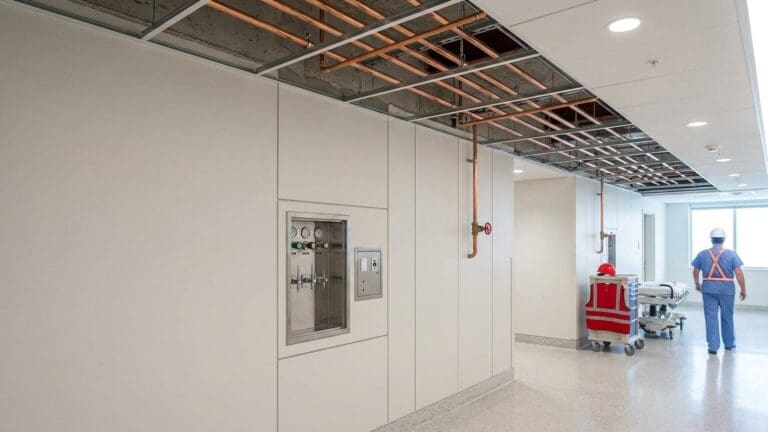
Medical gas is a life safety system, not a utility. Here is what NFPA 99 verification, ASSE 6010 certification, and occupied-hospital work actually require from a mechanical contractor in Northern Ohio.

Legionella Water Management Plans: ASHRAE 188 in Ohio
ASHRAE 188 sets the framework for a Legionella water management plan in hospitals and large buildings. Here is what Ohio facility teams need to know to build and maintain one.
Commercial Water Heater Replacement: Sizing and Code Guide
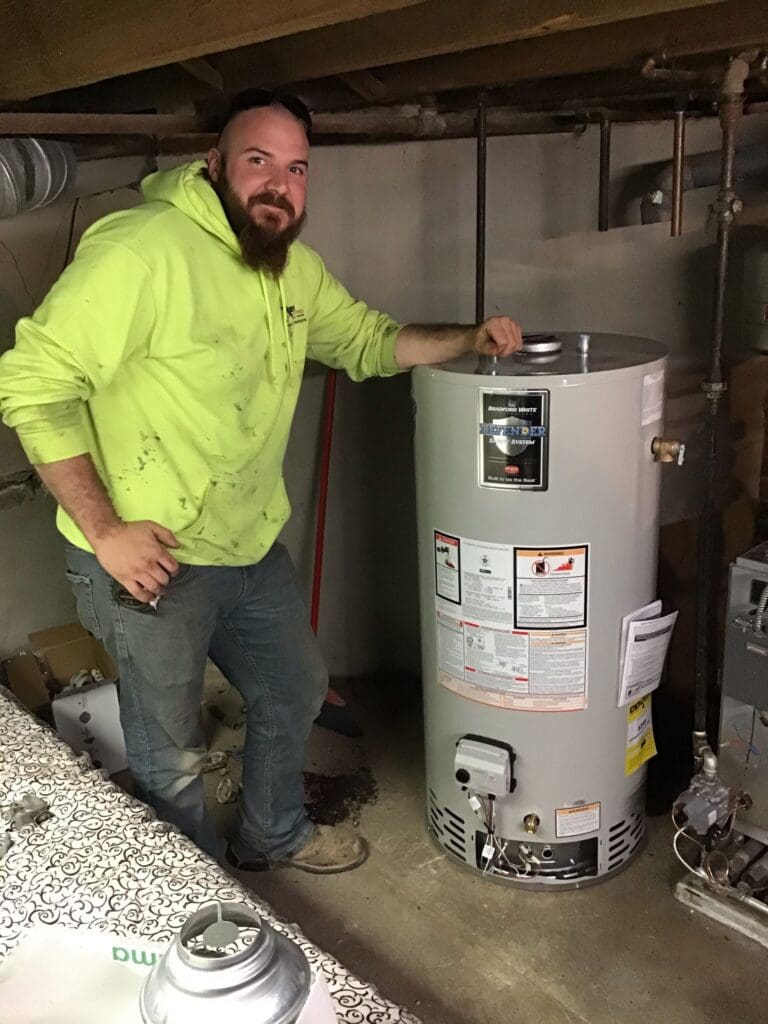
A practical field guide to sizing, fuel selection, venting, Legionella control, code steps, and phasing a commercial water heater replacement for Ohio schools, hospitals, and plants.
Need this handled at your facility?
Wilkes engineers, fabricates, and installs process piping, plumbing, and HVAC systems across Ohio.