The Commercial Plumbing Maintenance Checklist for Ohio
A commercial plumbing maintenance program has four working parts: a monthly walkthrough your own staff can run, a quarterly service visit by a licensed contractor, an annual set of certified tests and equipment services, and a written record that proves every one of them happened. Run consistently, that program converts most plumbing emergencies into scheduled work, which is the whole point of doing it. This checklist is written for the plant managers, facility directors, school business officials, and hospital facilities teams in Northern Ohio who own the budget line when a pipe lets go.
The failures that close a building are almost never sudden. A floor drain that has been slow since spring backs up during a home game. A water heater nobody has flushed in eight years quits on the coldest Monday in January. Each of those is a calendar problem wearing a plumbing costume, cheap to prevent and expensive to survive.
Key takeaways
- Split the work deliberately: staff take the monthly walkthrough, a licensed contractor takes valve exercising, water heater service, drain work, and anything certified.
- Certified backflow testing is the item a regulator asks about first. Ohio water suppliers run cross-connection control programs under Ohio EPA rules, and the supplier sets your interval.
- Two documents pay for themselves forever: an equipment inventory, and a valve schedule tied to a floor plan.
- Lake Erie winters make freeze protection a scheduled September item, not a January phone call.
- Buildings with complex water systems need a written water management program, not just a checklist.
Why does a commercial building need a plumbing maintenance program?
Because the real cost of a failure is almost never the repair. It is the water damage to finishes and inventory, the closed restrooms, the lost production hours, the emergency labor rate, and in regulated buildings the compliance exposure that follows.
There is also a documentation argument. Insurers, health inspectors, accreditation surveyors, and water suppliers all ask the same question in different words: show me your records. A building that can produce a dated log of tests, flushes, and inspections closes that conversation in a morning. A building that cannot spends three weeks reconstructing it from invoices.
The third argument is budgeting, since preventive work turns an unpredictable expense into a line item you can forecast. Water waste belongs in the same column. The EPA’s WaterSense program publishes commercial guidance on leak reduction and fixture efficiency, and one flush valve stuck open will quietly outspend a year of maintenance visits.
What belongs on the monthly plumbing walkthrough?
These are quick, high-value items. Your own staff should do them, because they are in the building daily and will notice a change before an outside technician can.
- Walk every mechanical room and look at the floor. Standing water, mineral crust, and rust staining are the earliest evidence of a weeping fitting or failing seal.
- Prime the traps in low-use floor drains. A dry trap lets sewer gas into occupied space, and the complaint arrives before the diagnosis.
- Activate emergency eyewashes and safety showers in shops, labs, and production areas, and log each one by location and date.
- Look at exposed piping for corrosion, condensation, damaged insulation, and hangers that have pulled out of the deck.
- Run sump pumps and sewage ejectors. Confirm the float travels, the pump moves water, and the check valve holds.
- Note every fixture that is running, dripping, or draining slowly. Slow is a data point, not a nuisance.
- Read the water meter when nothing should be drawing. Movement at 3 a.m. means a leak somewhere in the building.
What belongs on the quarterly service visit?
This is the visit where a contractor earns the fee, because most of it requires tools, judgment, and a willingness to touch things that have not moved in years.
- Exercise main and isolation valves. A gate valve that has not been cycled in a decade will not close when you need it, and that is when a small repair becomes a shutdown.
- Verify and correct the valve schedule and tagging. Every isolation valve tagged and mapped is the cheapest improvement most buildings can buy.
- Service grease interceptors and clean kitchen drain lines. Set the interval from observed loading, not the calendar. A cafeteria and a coffee bar do not share a schedule.
- Inspect water heaters and storage tanks. Test the temperature and pressure relief valve, check the anode where accessible, flush sediment, and confirm the mixing valve holds its setpoint.
- Camera or rod the problem drain lines with a history of backing up, rather than letting the next backup schedule the work for you.
- Inspect storm drainage, including roof drains, downspout bodies, and area drains, ahead of the season that will test them.
- Rebuild fixture trim in high-traffic restrooms, including flush valve diaphragms, faucet aerators, and sensor batteries.
One safety note belongs in the quarterly scope. Pump and heater work means isolating energy, and OSHA’s lockout and tagout standard, 29 CFR 1910.147, governs how that isolation is done and documented. Anyone working on this scope should be able to show you the procedure for a specific piece of equipment, not a generic policy binder.
What has to happen annually, and what does Ohio actually require?
Separate the annual list into two categories: good practice, and things a regulator asks about by name.
Certified backflow testing is the compliance item
In Ohio, public water suppliers administer cross-connection control programs under Ohio EPA rules in Ohio Administrative Code Chapter 3745-95. Testable assemblies have to be tested by a certified tester on the schedule the supplier sets, and annual testing is the common requirement. Ohio EPA’s backflow prevention resources explain how those programs are structured.
The test has to be run with calibrated gauges and reported in the format the supplier accepts. Miss it and you can expect a notice, then a fine, and in a serious case a shutoff. We walk through the sequence in our guide to backflow testing in Ohio.
The rest of the annual list
- Full water heater and hot water system service, including combustion service on gas-fired units and verification of recirculation pumps and balancing valves.
- Water management program review for buildings with complex water systems. ANSI/ASHRAE Standard 188, Legionellosis: Risk Management for Building Water Systems, is the framework, and the CDC’s Legionella resources explain why hospitals and senior living are held to it most directly.
- Domestic water booster pump service, covering seals, pressure settings, and control verification.
- Thermostatic mixing valve verification at the point of use. This is a scald safety item, not a comfort item, and the device standards published by ASSE International are what the valve was listed to.
- Water quality sampling where your building type calls for it. Schools should understand their obligations under the EPA’s Lead and Copper Rule and any state program layered on top of it.
- A piping condition survey in older buildings, looking for pinhole corrosion, failing dielectric unions, and runs that should be replaced on a plan rather than at 2 a.m.
Who owns each item, your staff or the contractor?
Ambiguity is what kills these programs. Every line needs an interval and a name attached before the first visit. The table below is the split we use as a starting point.
| Item | Interval | Owner | Why it matters |
|---|---|---|---|
| Mechanical room visual, trap priming, fixture notes | Monthly | In-house staff | Catches leaks and dry traps before they become calls |
| Sump and ejector pump function check | Monthly | In-house staff | A pit that fails during a storm floods finished space |
| Valve exercising and tag verification | Quarterly | Contractor | A valve that will not close turns a repair into a shutdown |
| Water heater inspection, relief valve test, flush | Quarterly | Contractor | Sediment and a stuck relief valve are both failure paths |
| Grease interceptor and kitchen line service | Set by loading | Contractor | Backups in food service close the operation, not just the drain |
| Certified backflow assembly test | Annual or as the supplier requires | Certified tester | Regulated under Ohio cross-connection control rules |
| Water management program review | Annual | Contractor and owner together | ASHRAE 188 framework for Legionella risk |
| Freeze protection verification | Every fall | Contractor | Northern Ohio freeze events break unprotected lines |
Whatever agreement you sign, ask for the deliverable in writing: the item list, the interval, who performs it, and how deficiencies get priced. Our commercial plumbing and HVAC services cover water and sanitary systems, storm drainage, hot water, backflow prevention, and water treatment, with maintenance agreements in one-year and three-year terms.
What does a Lake Erie winter add to the checklist?
Plenty, and most of it has to be done in September rather than argued about in January. The National Weather Service office in Cleveland is the practical reference for how the region’s cold snaps and lake effect events behave along the Erie, Huron, and Lorain county shoreline.
The fall list is short and specific. Verify heat trace circuits and their controllers, not just that the breaker is on. Confirm every exterior hose bib is frost-free or that its interior isolation valve closes and the line drains. Check insulation on lines in attics, crawl spaces, and loading docks. Test the low-limit and freeze stats on air handlers with hydronic coils, because a stuck damper and a 10 F night will split a coil in one shift.
What this means in Ohio: The most common winter loss in commercial buildings is not a main freezing. It is a small branch line in an unconditioned space, above a ceiling or behind a loading dock door somebody propped open. Walk those spaces in October with a thermometer, not in February with a bucket.
How do you build the program when you are starting from nothing?
Most buildings have no valve schedule, no equipment inventory, and no maintenance history. That is normal, and it is not a reason to delay. Build it in this order.
- Walk the building and inventory the equipment. Water heaters, booster pumps, sump and ejector pits, interceptors, backflow assemblies, mixing valves, and expansion tanks, each with a location, make, model, and serial number.
- Find and tag the valves. Mark every isolation valve on a floor plan and hang a durable tag on each. Note which valves are seized, because those become your first repair list.
- Pull the compliance picture. Ask your water supplier in writing which assemblies are on their inventory, what interval applies, and where reports go. Match that against what is installed.
- Rank the deficiencies you already have. Split them into safety, compliance, imminent failure, and deferred, with a rough dollar figure on each.
- Set the calendar and assign owners. Use the table above as the starting split, then adjust intervals as evidence comes in from the first two quarters.
- Decide what needs a permit. Replacements and alterations often do. Ohio’s building code is administered through the Ohio Board of Building Standards and enforced by the authority having jurisdiction, and your contractor should tell you which items trigger a permit before the work starts.
Keep the record simple enough that it gets filled out. For each visit: date, technician, what was inspected, what was found, what was corrected, what was deferred, and what parts were used. Attach the certified test reports, and keep one running deficiency list with a priority on every line.
How do you maintain a building that cannot go offline?
You plan the shutdown instead of reacting to one: temporary services, a written isolation strategy, night and weekend windows, and a tie-in sequence agreed with the facility team before anyone opens a pipe.
Institutional work also turns maintenance into capital planning. At Oberlin College, as part of the college’s commitment to achieving carbon neutrality, we were engaged to support the transition of campus infrastructure to more sustainable systems: a complete conversion of legacy steam and condensate systems to hydronic heating and chilled water cooling, allowing the elimination of natural gas-fired equipment. A conversion at that scale starts from the same inventory and valve schedule argued for above, because you cannot phase work across an occupied campus without knowing what isolates what.
The same discipline scales down to a school planning a summer window. If you are weighing a system change rather than another repair, our pieces on hydronic heating for schools and institutions and on when a commercial boiler is costing you money cover the decision. Ohio boiler operation carries its own inspection and certificate requirements administered through the Department of Commerce Division of Industrial Compliance, so put that date on the same calendar. Healthcare adds another layer again, which we cover in our overview of healthcare plumbing and medical gas.
Frequently asked questions
How often should commercial drain lines be cleaned?
It depends entirely on what goes down them. A commercial kitchen line may need attention quarterly or more often, while an office restroom stack can run for years without trouble. Set the interval from evidence rather than a guess: if a line has backed up once, put it on a schedule and adjust the frequency based on what the next cleaning finds. Camera inspection on a recurring problem line separates a grease issue from a broken pipe.
Is backflow testing really required every year?
Testable backflow prevention assemblies must be tested on the schedule your public water supplier sets under Ohio’s cross-connection control rules, and annual testing is the common requirement. The supplier, not the building owner, sets the interval and the reporting format, and some facility types are held to a shorter cycle. Confirm your requirement in writing, then keep every test report with the date and the tester’s certification.
What is the difference between preventive maintenance and a service call?
A service call is reactive: something failed, someone came out, usually at a premium rate and on the failure’s schedule rather than yours. Preventive maintenance is planned work on a defined interval, performed to find problems while they are small and keep equipment inside its operating conditions. The difference shows up twice: in a budget you can forecast, and in disruption that lands when the building can take it.
Can commercial plumbing maintenance actually reduce costs?
It reduces the largest costs, which are rarely the plumbing repair itself. The expensive outcomes are water damage to finishes and inventory, closed restrooms in a public building, lost production hours, emergency labor rates, and compliance penalties. A program that catches a weeping fitting, a failing relief valve, or a slow drain during a scheduled visit prevents all of those, and it extends the working life of water heaters and pumps.
What should we do first if we have no maintenance records at all?
Start with the inventory and the valve schedule, in that order, because every other decision depends on them. Then contact your water supplier to confirm which backflow assemblies are on their inventory and what interval applies. Those two steps usually take one walkthrough day in a mid-size building, and they convert an unknown liability into a priced list you can defend in a budget meeting.
Talk to Wilkes about your project
Bring a building list, an approximate fixture count, and any drawings, valve schedules, or past test reports you have. If you have none of that, say so, and we will start with a walkthrough and build the inventory with you. Either way you end up with a scope, an interval on every line, and a price you can put in next year’s budget.
Call (419) 433-2325, or use our contact page to request a quote. Wilkes Plumbing and Heating has served commercial, institutional, and industrial facilities from Huron, Ohio since 1912, across Sandusky, Norwalk, Port Clinton, Vermilion, Lorain, Fremont, and the surrounding counties.
Keep reading
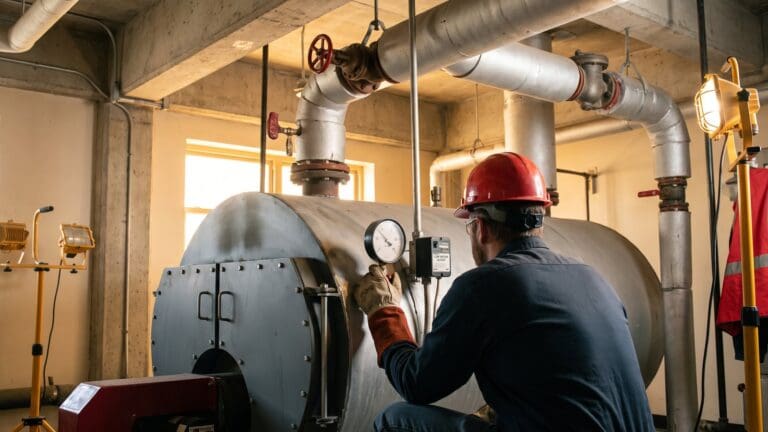
Commercial Boiler Maintenance: Checklist, Tune-Up and Ohio Rules
A frequency-by-frequency maintenance plan for commercial steam and hot water boilers, from the daily log to the annual combustion report, built around Ohio's inspection cycle.
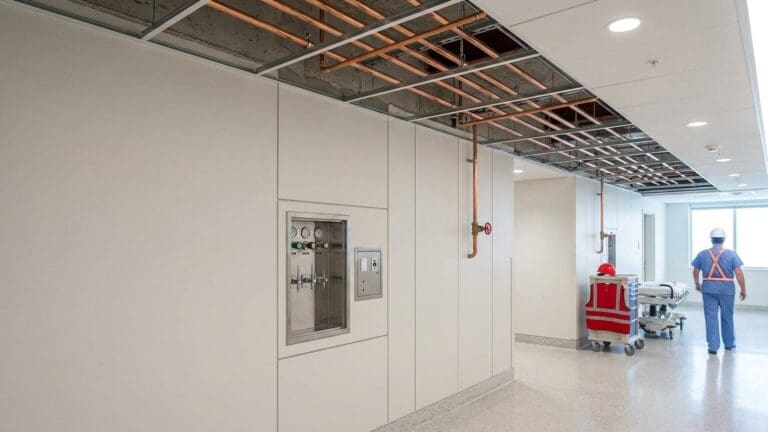
Medical Gas Piping: What Hospitals Need From a Contractor
Medical gas is a life safety system, not a utility. Here is what NFPA 99 verification, ASSE 6010 certification, and occupied-hospital work actually require from a mechanical contractor in Northern Ohio.
Legionella Water Management Plans: ASHRAE 188 in Ohio
ASHRAE 188 sets the framework for a Legionella water management plan in hospitals and large buildings. Here is what Ohio facility teams need to know to build and maintain one.
Need this handled at your facility?
Wilkes engineers, fabricates, and installs process piping, plumbing, and HVAC systems across Ohio.