Chemical Plant Piping: Materials, ASME B31.3, and Cleanliness
Chemical plant piping is governed by ASME B31.3 Process Piping, the code that sets design, material, fabrication, examination, and pressure test rules for piping in chemical, petroleum, pharmaceutical, paper, and similar processing plants. A paint or specialty chemical facility then adds a second requirement the code does not address at all: keeping the product clean, batch after batch, in a system that carries solvents, resins, and pigments that must never cross over. This article is for plant engineers, maintenance managers, and facility directors in Northern Ohio who are specifying, replacing, or expanding process lines and want to know what actually drives the decisions.
Get either half wrong and the cost shows up fast. A material mismatch becomes a weeping flange, then an unplanned outage. A contamination path becomes a scrapped batch, and in a coatings plant that is measured in drums, not gallons.
Key takeaways
- ASME B31.3 does not treat all lines alike. The fluid service category you assign drives material limits, examination percentage, and testing for the life of the system.
- Material selection is a chemistry question, not a catalog question. Concentration and temperature routinely flip the answer between carbon steel, 316L stainless, alloy, and lined pipe.
- Contamination control lives in the geometry: internal weld quality, real slope, and short dead legs. Cleaning procedures cannot rescue a system that was not designed to drain.
- Most of this work happens in an operating plant, so lockout, hot work permitting, and tie-in sequencing shape the schedule more than the pipe does.
- Northern Ohio adds freeze exposure on outdoor runs and an Ohio EPA air permit that your vent and fume collection tie-ins have to match.
What does ASME B31.3 actually cover, and when does it apply?
ASME B31.3 is one section of the ASME B31 family of piping codes, and each section is written for a different class of service. B31.3 covers process piping in chemical and industrial plants. ASME B31.1 Power Piping covers power plant piping and boiler external piping. Most plants of any size contain both, which is why the boundary between them belongs on a drawing at the start of a project instead of in an argument at the end.
The code addresses design for pressure and temperature, allowable materials and their service limits, component and joint design, fabrication and welding, the extent of examination, and the pressure test before startup. It is not a hurdle you clear at commissioning. It shapes the first material decision and every document after it.
Fluid service categories are the hinge
The most consequential decision under B31.3 is which fluid service category a line falls into, because the rest of the requirements follow from it. Normal fluid service is the default. Category D is relaxed, and is reserved for fluids that are nonflammable, nontoxic, and not damaging to human tissue, held inside limited pressure and temperature bounds. Category M runs the other way: fluids where a single exposure can cause serious irreversible harm. High pressure service is its own category again.
A solvent line and a plant water line can share a rack and carry entirely different obligations for welder qualification, examination, and testing. If your specification does not name the category, someone downstream will assume one, and the assumption is usually the cheap one. For a primer on how process piping differs from building plumbing, see our explainer on what process piping is and how it differs from plumbing.
Where OSHA process safety management overlaps
If your facility handles a listed highly hazardous chemical above the threshold quantity, OSHA 29 CFR 1910.119 adds a mechanical integrity program on top of the code: written procedures, inspection and testing on a schedule, and equipment installed consistent with recognized engineering practice. In that world the B31.3 documentation package is not paperwork. It is the baseline your inspection program is measured against for the next 20 years.
How do you choose the right pipe material for a chemical or paint plant?
There is no universal answer, and any contractor who names a material before asking about your process is selling rather than engineering. Selection turns on the fluid, the concentration, the operating and upset temperature, the pressure, and how clean the product has to stay.
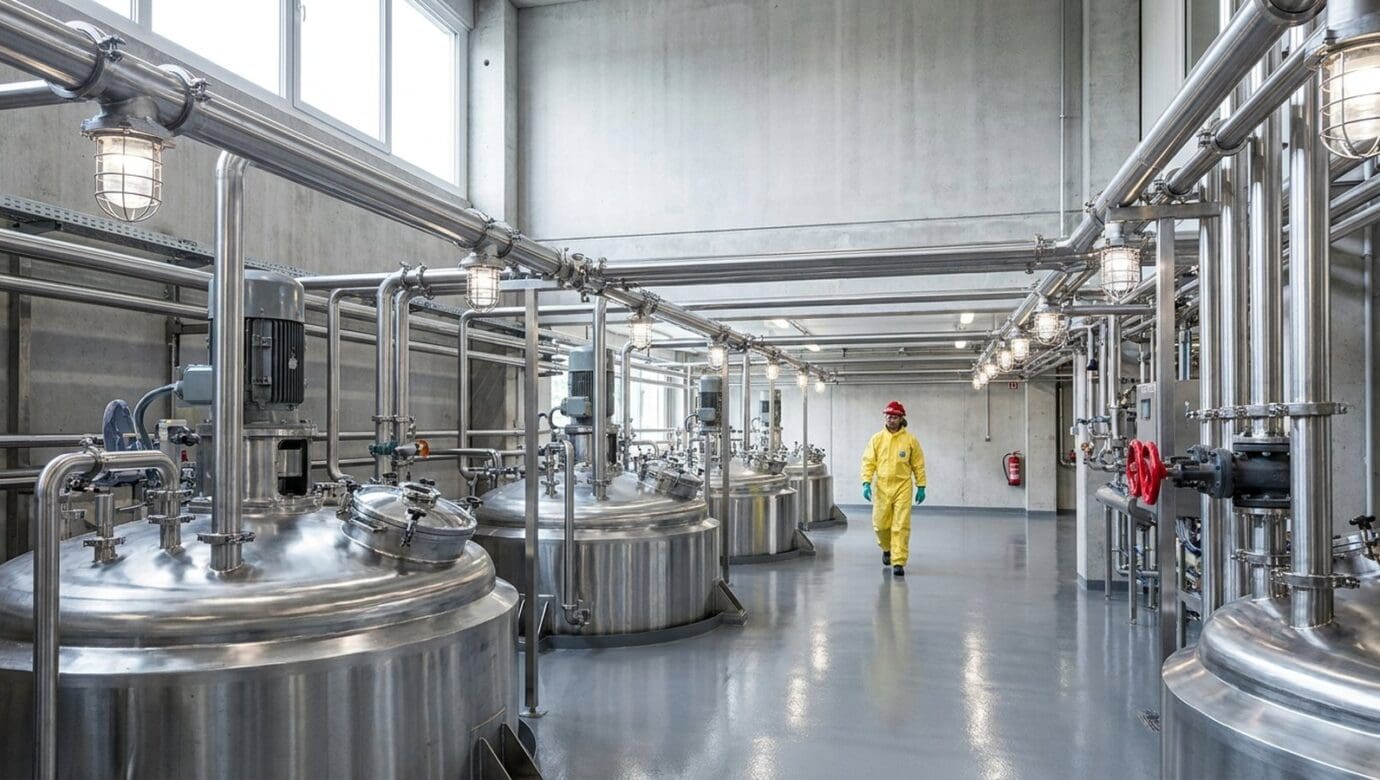
Stainless steel is the workhorse for corrosive service and for any line where product cleanliness matters. Type 316L is common because the low carbon content reduces sensitization at the weld, and it takes a smooth, cleanable internal surface. Our reactor and process piping work for AkzoNobel was stainless steel welded process piping for exactly these reasons.
Carbon steel remains correct for utility and noncorrosive service and for hot lines where the fluid is compatible. It is also the material most often reused past its service life, because it is already in place.
Nickel alloys and lined pipe earn their cost in chemistries where stainless will not survive. Lined systems change the joining method, the support spacing, and the repair procedure, so they have to be designed in rather than substituted late.
| Material | Typical fit | Watch for | Joining method |
|---|---|---|---|
| Carbon steel | Utility water, air, steam, compatible hot organics | General corrosion, scale that becomes product contamination | Welded, some threaded on small utility bore |
| 316L stainless | Solvents, resins, pigment slurries, clean product lines | Chlorides at temperature, poor purge on the root pass | Welded, orbital welded on clean service |
| Higher nickel alloy | Strong acids, oxidizers, chloride service that defeats 316L | Cost, lead time, tighter procedure qualification | Welded with matching or overmatching filler |
| Lined steel pipe | Concentrated acids and aggressive halogenated service | Liner damage at heat, spool lengths fixed at the shop | Flanged spools, no field cutting |
| Thermoplastic | Dilute chemistry, drains, low temperature and pressure | Temperature derating, support spacing, thermal movement | Fusion or solvent cement per material |
Two solvents that sound alike can behave very differently against the same alloy, and a 20 degree F change in operating temperature can move a material from acceptable to marginal. Bring your safety data sheets and real process conditions to the table, and expect the selection to be justified in writing.
What keeps a paint line from contaminating the next batch?
Coatings manufacturing carries a requirement most process plants do not. Color and formulation carryover between batches is a defect, and the piping system is one of the places it hides. Four geometry decisions control most of the risk.
Internal surface quality. A rough or irregular root pass gives residue somewhere to sit, and no cleaning cycle reaches it reliably. Full penetration welds with a properly purged internal surface are the baseline, which is why orbital welding on high purity process lines shows up in paint and specialty chemical specifications. The value is repeatability: the same current, travel speed, and gas on weld 400 as on weld 1.
Drainability. A line that is pitched and pocket free actually empties, and a low spot holds residue through every flush. Pitch product lines to a low point drain, and prove the pitch after the hangers are set rather than on the drawing.
Dead legs. Every unused branch, oversized tee, and abandoned stub is a reservoir. Hygienic design practice, including ASME BPE Bioprocessing Equipment, holds dead leg length to a small multiple of pipe diameter for that reason. Paint plants are not bioprocessing plants, but the physics of a stagnant pocket is the same.
Segregation. Dedicated lines for particular color families or chemistries, or a written and verified changeover procedure, keep the risk from depending on somebody’s memory on second shift. Much of that work leaves our shop as prefabricated assemblies, covered in detail in prefabricated piping skids.
How much examination and testing does the code require?
More than most owners budget for, and less than a nervous specification sometimes demands. Under B31.3, normal fluid service carries a random radiographic examination requirement on a percentage of welds, Category D leans on visual examination, and Category M and high pressure service escalate from there. The percentage is not a contractor preference. It follows from the category assigned in design.
Welding procedures and welders are qualified under the ASME Boiler and Pressure Vessel Code Section IX, and qualification is specific to the material group, thickness range, and process. A welder qualified on carbon steel is not thereby qualified on your stainless line. The American Welding Society standards catalog is the companion reference most shops keep alongside it.
Testing is normally hydrostatic at a multiple of design pressure. Pneumatic testing is permitted in limited cases and carries far more stored energy, so it comes with added precautions and a larger exclusion zone. If a line cannot tolerate water, say so during design, not the week of the test.
One rule of thumb worth writing into the bid documents: ask for the turnover package up front, not at substantial completion. A weld map keyed to isometrics, a welder log, material test reports, examination records, and signed test records are cheap to produce as the work goes in and expensive to reconstruct later.
How do you run this work inside a plant that is still producing?
Most chemical and paint plant piping is installed in an operating facility, and that constraint drives more of the plan than the piping does. Isolating an existing line falls under OSHA 29 CFR 1910.147 lockout and tagout, cutting and welding near flammable inventory falls under hot work permitting built on NFPA 51B, and tank and vessel entries fall under OSHA confined space rules. None of it is optional and all of it takes calendar time.
A tie-in inside a running plant follows a predictable sequence:
- Walk the space before detailing. In a plant that has grown over decades, the drawings will not tell the whole story. Field verify elevations, supports, and what is actually in the rack.
- Fix the tie-in points and isolation boundary with operations. Agree on which valves hold, whether they are proven, and what gets blinded.
- Fabricate off site. Every weld made in the shop is a weld not made on a permit inside a production area.
- Book the outage against the production schedule, not the contractor’s convenience.
- Pre-stage material and rigging. A crew waiting inside a production area is burning the most expensive hours on the job.
- Run the isolation, decontamination, and hot work permit as one planned event with the plant’s safety organization present.
- Weld, examine, and test before the isolation is released, so a failed test does not consume the outage window.
- Turn over documentation the same week. Records assembled later are records assembled from memory.
Our turnkey project for AkzoNobel in Huron is a working example of that discipline. The scope covered turnkey installation of a new reactor, a core component of their chemical manufacturing process, along with stainless steel welded process piping across seven separate buildings, both new installations and modifications to existing infrastructure. Tight timelines, intricate spatial constraints, and a requirement to minimize disruption to ongoing production shaped the sequence, and each building carried its own conditions while safety and quality protocols held constant.
What does Northern Ohio add to the problem?
Two things, and both are schedule items rather than engineering curiosities.
Freeze exposure. Between Huron, Sandusky, Norwalk, and Lorain, outdoor runs see sustained subfreezing spells from late November into March, with lake effect wind that strips heat off insulated pipe faster than a design temperature suggests. Water legs, sample lines, safety showers, and dilute aqueous chemistry need heat trace, insulation, or a drain down procedure that someone owns. Freeze damage in a chemical plant is rarely just a broken pipe. It is a broken pipe in a bunded area with a product release attached to it.
Air permitting. Coatings and solvent handling operations in Ohio are permitted through Ohio EPA’s Division of Air Pollution Control, and the permit describes the equipment. If your project touches a vent header, a fume collection duct, a thermal oxidizer feed, or a tank vent, the installed configuration has to match the permit. That is a design input, not a punch list item.
What this means in Ohio: plan solvent and aqueous outdoor runs for a January cold snap, not for an average winter, and confirm early whether a tie-in changes a permitted emissions unit. Both problems are cheap to solve in design and expensive to solve after startup.
What should you ask a piping contractor before you award the work?
The proposals will look similar. The differences sit in the answers to a short list of questions.
- How do you qualify welding procedures and welders for this material and this service, and may we see the documentation before mobilization?
- What fluid service category are you pricing, and what examination percentage does that carry?
- Do you fabricate in your own shop or subcontract it, and who owns the weld quality if it is subcontracted?
- What is your process when a field discovery changes a route, and who pays for it?
- What documentation do we receive at turnover, and on what schedule?
- Who from your side attends the plant’s safety and permit meetings, and are they on site during tie-ins?
A longer version of this list is in our guide to choosing an industrial piping contractor. Our own industrial process piping group designs, fabricates, and installs systems for chemical, paint, plastics, and food plants across Ohio, with shop work and orbital welding handled through our piping fabrication shop in Huron.
Frequently asked questions
Is ASME B31.3 required by law in Ohio?
The code becomes mandatory when an authority having jurisdiction adopts it, when it is written into a state or local requirement, or when your project specification or insurer requires it. In practice, ASME B31.3 is the recognized standard for process piping in chemical and industrial plants and is routinely specified regardless of the statutory path. Confirm the applicable requirements with your engineer and your jurisdiction before design begins, because the answer drives material, examination, and testing.
What is the difference between ASME B31.3 and ASME B31.1?
They are different sections of the same family of piping codes, written for different applications. B31.3 Process Piping covers piping in chemical, petroleum, pharmaceutical, and similar processing plants. B31.1 Power Piping covers power plant piping and boiler external piping. A single facility often contains both, so agreeing early on where the boundary sits keeps design, examination, and documentation consistent on each side of the line.
Can existing carbon steel lines be reused when a process changes?
Sometimes, and it has to be evaluated rather than assumed. Three questions decide it: whether the existing material is compatible with the new fluid at its real concentration and temperature, what condition the pipe wall is in after years of service, and whether the original design still covers the new pressure and temperature. Reusing an unsuitable line is one of the more expensive mistakes in a plant conversion, so the assessment belongs at the front of the project.
How much does contamination control add to a piping package?
It varies with how clean the product has to be, but the cost is concentrated in fabrication rather than material. Purged full penetration welds, orbital welding, verified slope, short dead legs, and the inspection records that prove it all take shop hours. The offset is that those hours replace field hours and prevent scrapped batches, which is why plants that measure carryover usually decide the package pays for itself.
What should we have ready before a contractor walks the plant?
Bring the process and instrumentation drawings if they exist, safety data sheets for every fluid in scope, operating and upset pressures and temperatures, the flow rates, any existing isometric drawings, and your shutdown calendar. Also bring your site safety requirements and permit process. A contractor who has that package in hand can price the real job instead of pricing risk.
Talk to Wilkes about your project
Send us your drawings, process descriptions, or a scope outline, and tell us the fluid, the conditions, the cleanliness requirement, and any shutdown window you have to work inside. If drawings do not exist, that is common in a plant of any age, and a site walk is where we start instead.
Call (419) 433-2325, or request a quote. Wilkes Plumbing & Heating has worked out of Huron, Ohio since 1912, and we serve chemical, paint, plastics, and food plants across Erie, Huron, Lorain, Ottawa, and Sandusky counties and throughout Ohio.
Keep reading
Warehouse Heating in Ohio: Unit Heaters, Infrared and Make-Up Air
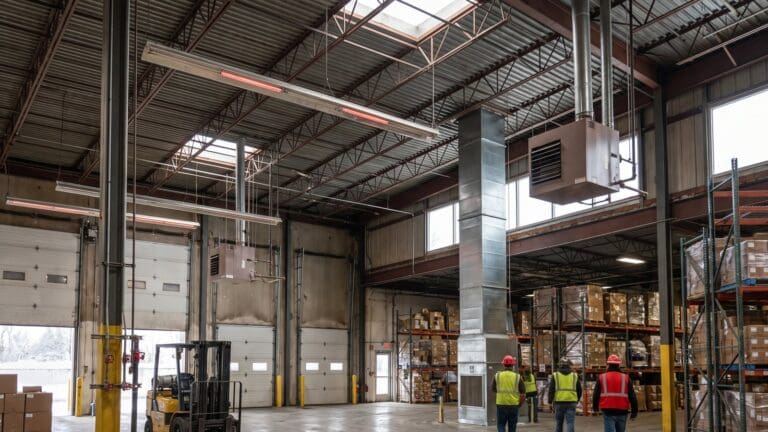
A plant engineer's guide to choosing between unit heaters, radiant tube heaters, destratification fans and make-up air, and to balancing exhaust so the building stops fighting its own heat.
Turnkey Process Piping and a Reactor Install at AkzoNobel
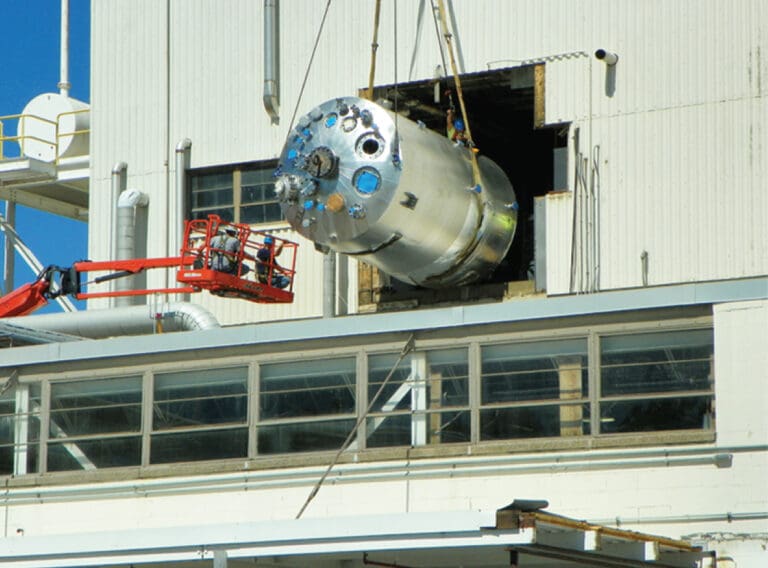
A look inside a turnkey reactor installation and stainless steel process piping scope spread across seven buildings at a Huron, Ohio chemical plant, sequenced so production never stopped.
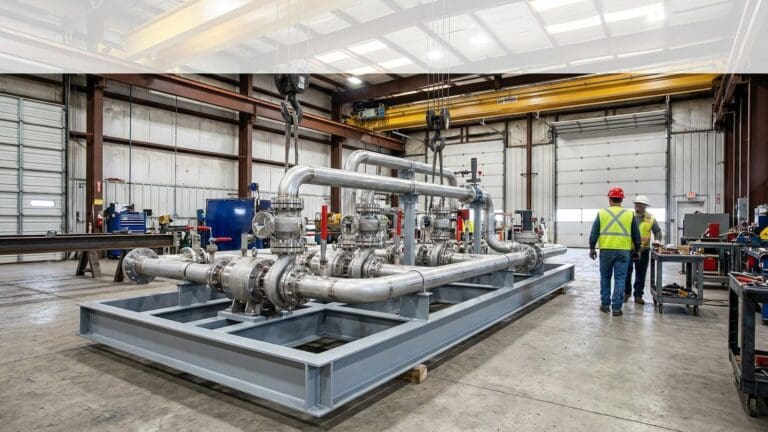
Prefabricated Piping Skids: Faster Installs, Cleaner Welds
Prefabricated piping skids move the slow, inspection-heavy work off your production floor and into a controlled shop. Here is how Northern Ohio plants scope, test, rig, and tie in a modular process assembly without losing production time.
Need this handled at your facility?
Wilkes engineers, fabricates, and installs process piping, plumbing, and HVAC systems across Ohio.