Sanitary Process Piping for Food and Beverage Plants
Sanitary process piping is piping built, finished and arranged so a food or beverage plant can clean it without taking it apart, verify that the cleaning worked, and keep product moving with no pockets where bacteria can grow. Ohio food and beverage plants get there by designing to ASME BPE, the 3-A Sanitary Standards, and the FDA’s expectations under FSMA and current good manufacturing practice, not by simply asking for stainless steel.
This article is for plant engineers, food safety managers, and facility directors in Northern Ohio who are specifying a new line, chasing a recurring clean-in-place failure, or trying to understand why a piping contractor keeps talking about slope and dead legs.
Key takeaways
- Sanitary piping is defined by surface finish, slope, cleanable connections and dead-leg limits, not just by using stainless steel.
- ASME BPE and the 3-A Sanitary Standards set the engineering detail; FDA FSMA and current good manufacturing practice set the food safety expectation behind them.
- Dead legs longer than about 2 pipe diameters from the flow path are a common source of contamination that clean-in-place cycles cannot reach.
- Product piping and utility piping are not held to the same standard, and mixing up the two on a drawing causes rework.
- Orbital welding is the standard joining method for sanitary tube because it produces a consistent, crevice-free weld that a manual weld cannot reliably match.
What Makes Piping “Sanitary” in a Food or Beverage Plant?
Sanitary piping starts with material choice, but the standard turns on six things: material, interior surface finish, slope, connection type, dead-leg length and weld quality. Get any one wrong and the line will not clean reliably even if every other detail is correct.
Material and surface finish
Product-contact sanitary tube is almost always 316L stainless steel, polished to a specified interior finish so residue and bacteria have nowhere to lodge. ASME BPE assigns finish grades by interior roughness, and the finish called out on the drawing has to match what actually gets installed, not a close substitute.
Slope and drainability
Every run has to slope continuously toward a drain point, typically at least a quarter inch per foot for tube and more for larger diameters, with no low spots where solution or product can sit. A support that lets a 20 ft. run sag half an inch in the middle defeats the whole design.
Dead legs and cleanable connections
A dead leg is any branch, instrument port or unused connection that sits outside the main flow path during cleaning. 3-A Sanitary Standards and ASME BPE both treat dead-leg length as a ratio of the branch length to its diameter, and connections have to be sanitary clamp, tri-clamp or welded, never threaded, in the product zone.
Rule of thumb: Keep dead-leg length to no more than 2 pipe diameters from the main flow path. Longer than that, and a clean-in-place cycle typically cannot reach it, no matter how long you run the cycle.
Welding method
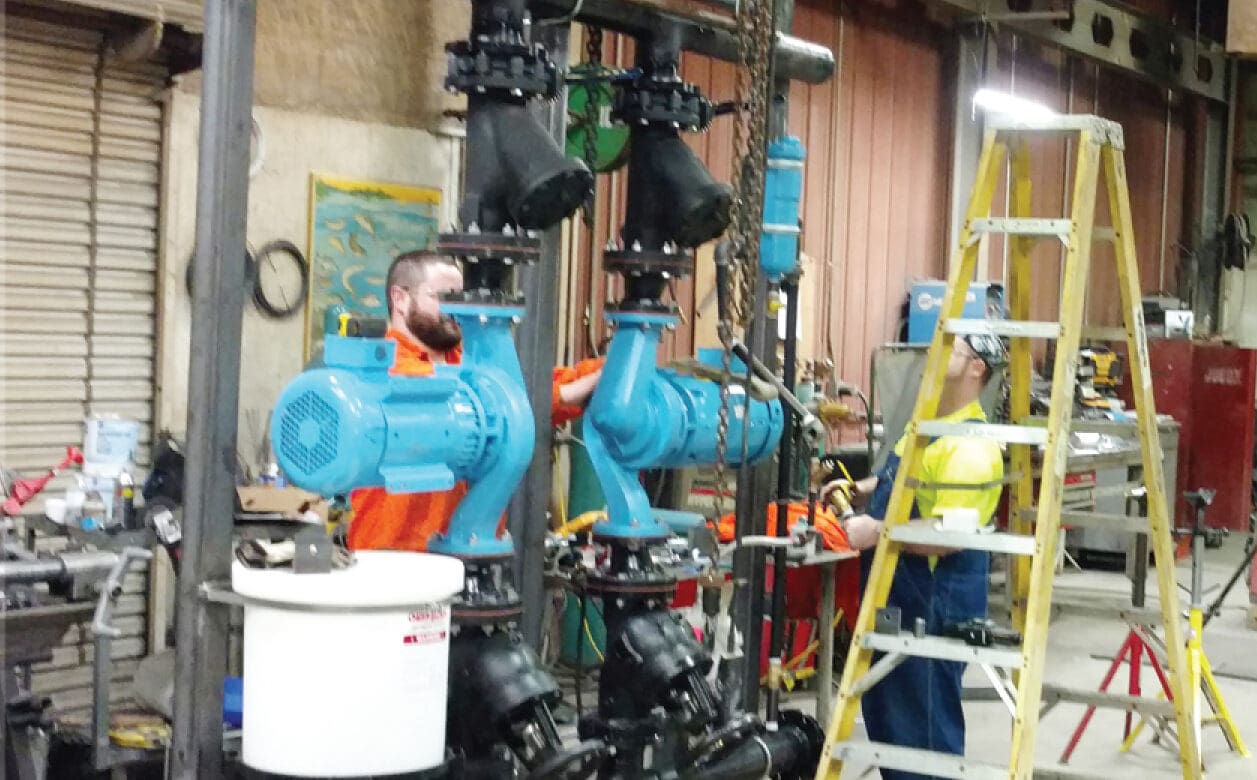
Manual TIG welding can produce a sanitary-looking bead, but the result depends on the welder’s hand that day. Orbital welding rotates a fixed arc around the tube in a controlled, repeatable pass, which is why it is the standard joining method for high-purity and sanitary tube. Wilkes uses orbital welding on this kind of work for that consistency, and fabricates sanitary spools in a controlled shop as part of its industrial piping fabrication work, which keeps weld quality consistent before anything reaches the field.
What Standards Govern Sanitary Process Piping?
Three bodies of guidance cover this work, and they do different jobs. Knowing which one answers which question keeps a design review from turning into a debate about the wrong document.
ASME BPE
The ASME Bioprocessing Equipment standard (BPE) covers the engineering detail: surface finish grades, dimensional tolerances for tube and fittings, slope, and the design of process components like diaphragm valves. It grew out of pharmaceutical and biotech work, and food and beverage engineers adopted it because nothing else in the piping codes gets this specific about cleanability.
3-A Sanitary Standards
The 3-A Sanitary Standards set equipment-level requirements written specifically for dairy and food processing equipment, including fittings, pumps and sensors that touch product. A component carrying the 3-A symbol has been reviewed against a published standard for cleanability and material.
FDA FSMA and current good manufacturing practice
The FDA’s Food Safety Modernization Act (FSMA) puts legal weight behind preventive controls, and current good manufacturing practice (cGMP) expectations describe equipment and facilities in terms that map directly onto piping: easily cleanable, no unnecessary crevices, no product buildup on food-contact surfaces. Neither document specifies a slope percentage or a finish grade; they describe the outcome, and ASME BPE and 3-A are how a contractor gets there.
Product Piping vs. Utility Piping: Where Do the Rules Apply?
Not every pipe in a food plant needs to meet BPE finish grades. The line dividing sanitary piping from standard industrial piping is whether the pipe carries product or touches product surfaces, or whether it carries a utility that never contacts food.
Steam, compressed air, plant water and condensate lines typically run as standard industrial process piping, sized and rated to ASME B31.3 for the pressure and temperature involved, in carbon steel or schedule-rated stainless. Product piping, jacketed piping and any surface a food product touches has to meet the sanitary standard instead. Wilkes builds both kinds of piping on the same industrial projects, and also handles the different material and corrosion requirements of chemical and paint plant piping, where the sanitary rules described here do not apply.
A CIP supply line feeding a sanitary circuit is a hybrid: it is a utility line up to the point it enters product piping, and that connection point is where the sanitary requirements start.
| Attribute | Sanitary tubing (ASME BPE) | Standard process pipe (ASME B31.3) |
|---|---|---|
| Sizing convention | Tube outside diameter, in fractions of an inch | Nominal pipe size, based on schedule |
| Typical material | 316L stainless steel, polished interior | Carbon steel, stainless, or alloy as service requires |
| Interior finish | Specified roughness grade, mechanically or electropolished | Mill finish, not specified for cleanability |
| Connections | Sanitary clamp fittings or orbital weld | Threaded, flanged, or standard butt weld |
| Slope requirement | Continuous slope to a drain point, no low spots | Sloped for drainage where specified, not universally required |
| Governing document | ASME BPE and 3-A Sanitary Standards | ASME B31.3 |
How Do Clean-in-Place and Steam-in-Place Systems Work?
Clean-in-place (CIP) circulates cleaning and sanitizing solution through piping and equipment without disassembly. Steam-in-place (SIP) does the same job with steam, usually to reach a sterility level CIP alone cannot achieve. Both depend entirely on the piping being sanitary in the first place.
What a CIP cycle needs from the piping
A CIP circuit needs full flow velocity through every branch, which is why dead legs defeat it: solution moving at several feet per second through the main line barely moves at all into a stub off to the side. It also needs the slope and drain points described above so the line does not trap rinse water between cycles, and it needs valves that shut off cleanly without leaving a gasket crevice for product to hide behind.
What SIP adds
Steam-in-place pushes the same piping through a full thermal cycle, so every gasket, seal and instrument fitting in the loop has to be rated for the temperature and pressure the steam cycle reaches, not just for product service. A valve or sensor rated for CIP chemical exposure but not for steam temperature will fail first, usually at the seal.
Isolating a line for steam work follows the same hazardous-energy principle OSHA describes for lockout and tagout under 29 CFR 1910.147: steam and condensate lines get physically isolated and verified de-energized before anyone opens a fitting, not just closed at a control panel.
What Causes Sanitary Piping to Fail in Food Plants?
Most sanitary piping problems trace back to a handful of repeatable mistakes, not exotic causes.
Common failure points
Unsupported spans that sag and create a low point. Dead legs added after commissioning, usually an instrument tap nobody accounted for in the original CIP validation. Gaskets swapped for a cheaper or wrong-hardness substitute during a maintenance call, which changes the crevice at every clamp joint. Threaded fittings added downstream of a sanitary run because it was faster than sourcing a clamp fitting. Each of these looks minor, and each one shows up in a swab test.
Why it matters under FDA expectations
The FDA’s Food Code and cGMP expectations both treat a food-contact surface that cannot be effectively cleaned as a facility deficiency, not a cosmetic one. A single unauthorized field modification, made without updating the CIP validation, is enough to put a line out of compliance even though nothing about the original design changed.
How Does Northern Ohio’s Food and Beverage Sector Use This Work?
Erie, Huron, Lorain and the surrounding counties carry a real concentration of food and beverage manufacturing, from bakeries and snack producers to beverage bottling and ingredient processing. Plants in this region take on sanitary piping projects for the same reasons plants everywhere do: a new line, a product change that adds an allergen-control requirement, or a CIP system that has stopped passing swab tests.
Two local conditions shape how that work gets planned. Lake Erie winters put outdoor and unheated-space utility piping, including CIP water supply and condensate return, at real freeze risk, so those runs need the same freeze protection attention as any other Northern Ohio mechanical system. And potable water entering a food plant for product use or CIP makeup has to be protected from backflow at the point of connection, which Ohio EPA addresses through its backflow prevention program.
A regional example
Wilkes has done this kind of work for Pepperidge Farms on multiple occasions, expanding Goldfish and cookie production lines with seasoning piping, steam and condensate piping, and jacketed piping built for food preparation lines. That mix, product piping, utility piping and jacketed piping on the same project, is typical of how a food plant expansion actually breaks down once the drawings get specific.
What Does a Sanitary Piping Project Look Like, Start to Finish?
A sanitary piping project follows a consistent sequence whether it is a full new line or a retrofit into an existing plant.
- Define the process: what product moves through the line, at what temperature and flow rate, and what CIP or SIP cycle it needs to support.
- Route the line for continuous slope to a drain point, keeping dead legs at or below 2 pipe diameters from the main flow path.
- Select material, tube size and finish grade against ASME BPE and any 3-A Sanitary Standards that apply to the equipment in the loop.
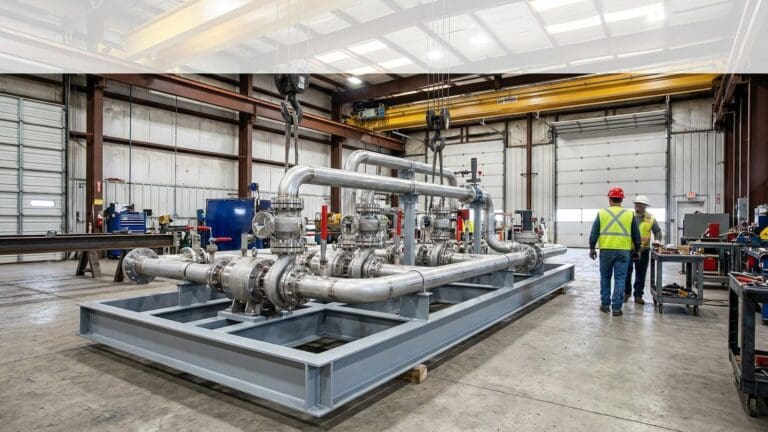
- Fabricate and orbital-weld the sanitary sections in the shop where possible, using prefabricated piping skids to control weld quality and shorten field time.
- Install, support and pressure-test the piping, then document the finish grade, slope and dead-leg lengths for the plant’s CIP validation file.
- Commission the CIP or SIP cycle against the as-built piping, not the original drawing, and correct anything the swab tests flag before turnover.
Frequently asked questions
What is the difference between sanitary piping and standard stainless piping?
Standard stainless piping is rated for pressure and corrosion resistance but is not built for cleanability. Sanitary piping adds a specified interior surface finish, continuous slope to a drain, dead-leg limits, and cleanable connections like sanitary clamp fittings, all defined by ASME BPE and 3-A Sanitary Standards so the line can be cleaned in place and verified without disassembly.
Do I need ASME BPE or 3-A Sanitary Standards, or both?
Most food and beverage sanitary piping projects use both. ASME BPE governs the piping and process equipment design detail, including finish grades and slope, while 3-A Sanitary Standards apply to specific equipment items, like pumps, valves and sensors, that need to meet a published cleanability standard for that equipment category.
How long can a dead leg be on a sanitary line?
A common engineering rule of thumb keeps dead-leg length at or below 2 times the branch diameter, measured from the main flow path to the end of the branch. Longer than that, a clean-in-place cycle typically cannot generate enough turbulence in the branch to remove residue reliably, regardless of cycle time or temperature.
Can existing utility piping be converted to sanitary service?
Rarely without significant rework. Utility piping is usually the wrong material grade, lacks the specified interior finish, and was not routed for continuous slope or dead-leg control. It is almost always more reliable, and often no more expensive, to run new sanitary piping to the product zone than to try to requalify an existing utility run.
What should I bring to a first conversation about a sanitary piping project?
Bring the process flow you need supported: product, temperature, flow rate, and CIP or SIP requirements, along with any equipment cut sheets for pumps, valves or vessels already selected. A rough sketch of the plant area and any known freeze-risk or exterior routing helps a contractor scope the project accurately on the first visit.
Talk to Wilkes about your project
Bring the process details: what the line carries, at what temperature and pressure, how it needs to clean, and any equipment already selected for the loop. If you have an existing CIP validation file or a swab test history showing where a line is failing, that shortens the first site visit considerably.
Call Wilkes Plumbing & Heating at (419) 433-2325 to set up a walk-through. You can also request a quote online.
Keep reading
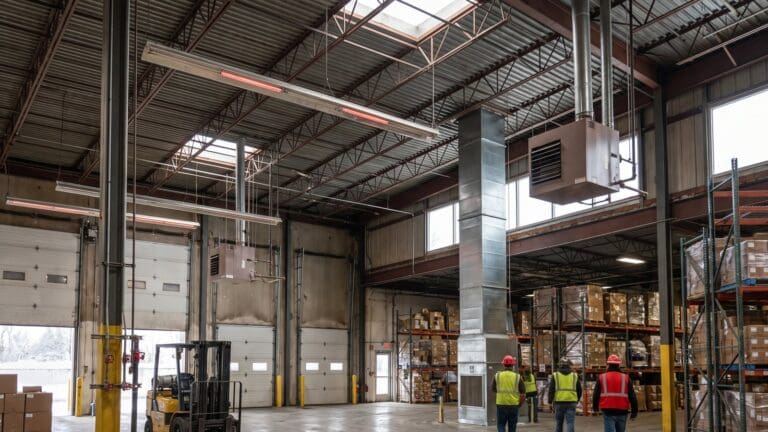
Warehouse Heating in Ohio: Unit Heaters, Infrared and Make-Up Air
A plant engineer's guide to choosing between unit heaters, radiant tube heaters, destratification fans and make-up air, and to balancing exhaust so the building stops fighting its own heat.
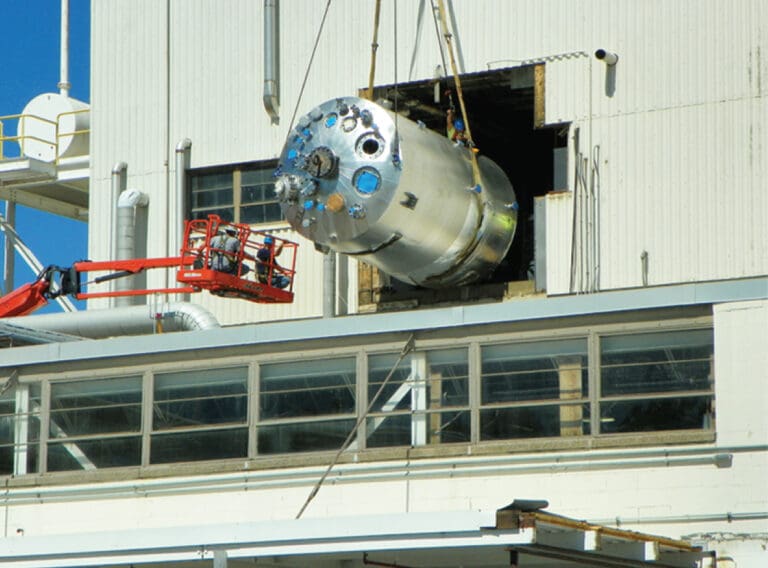
Turnkey Process Piping and a Reactor Install at AkzoNobel
A look inside a turnkey reactor installation and stainless steel process piping scope spread across seven buildings at a Huron, Ohio chemical plant, sequenced so production never stopped.
Prefabricated Piping Skids: Faster Installs, Cleaner Welds
Prefabricated piping skids move the slow, inspection-heavy work off your production floor and into a controlled shop. Here is how Northern Ohio plants scope, test, rig, and tie in a modular process assembly without losing production time.
Need this handled at your facility?
Wilkes engineers, fabricates, and installs process piping, plumbing, and HVAC systems across Ohio.