Turnkey Process Piping and a Reactor Install at AkzoNobel
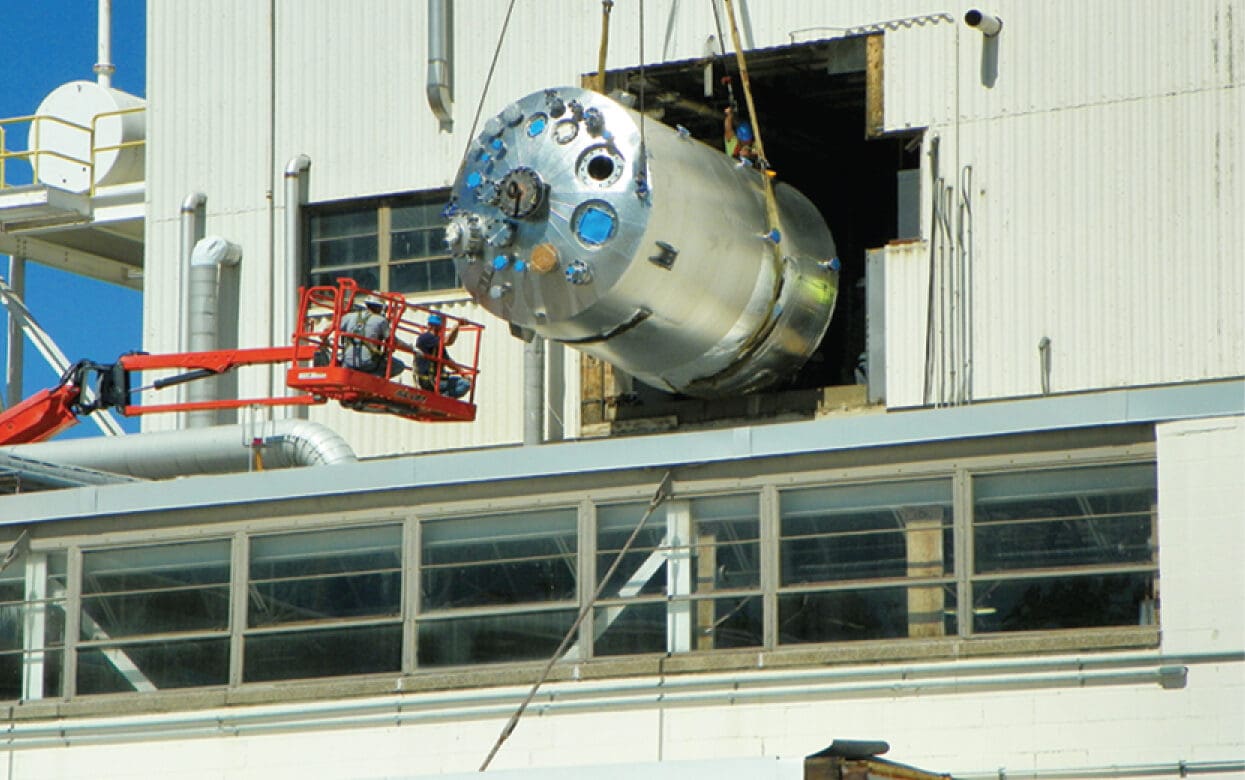
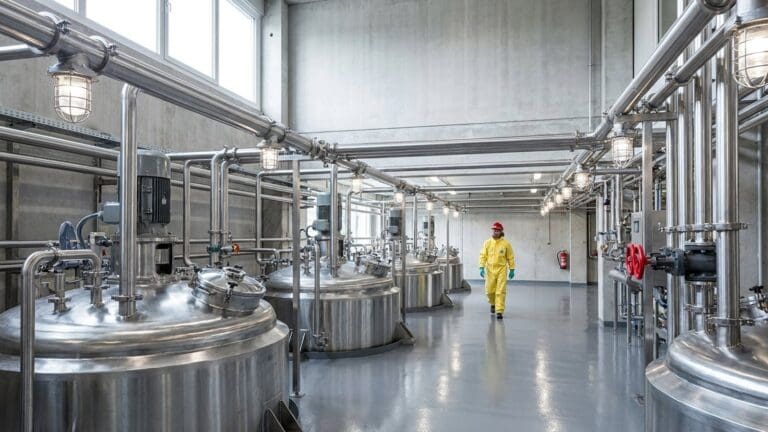
At AkzoNobel’s operation in Huron, Ohio, Wilkes delivered a turnkey process piping scope built around the installation of a new reactor, with stainless steel welded lines running across seven separate buildings and tying back into systems that were already in service. Turnkey meant one contractor carried the work from piping design through fabrication, field installation, and testing, then handed back a system the plant could put into production. The reactor is a core component of the plant’s chemical manufacturing process, so the work moved under tight timelines and real spatial constraints.
This is written for plant engineers, maintenance managers, and capital project managers at chemical, paint, plastics, and coatings plants who are scoping a vessel installation or a line expansion and want to see how that work is actually sequenced. The constraint that shaped every decision on this job is easy to state and hard to satisfy: production kept running the whole time.
Key takeaways
- Turnkey earns its price when the interfaces are the risk. On a multi-trade install with many tie-ins, the expensive failures happen in the gaps between contracts, not inside any single scope.
- Prefabrication is what buys back an outage window. Shop welded spools turn a shutdown into an assembly exercise instead of a construction exercise.
- Welded stainless in chemical service is a documentation problem as much as a skill problem. Procedures, welder qualification, and examination records have to be consistent across every building.
- Field verification beats the drawing set in an old plant. Existing infrastructure is rarely as-built, and a spool that does not fit during a shutdown costs the whole window.
- Material, joint design, and examination scope are cheap to settle in design and expensive to revisit after fabrication.
What did the AkzoNobel scope actually cover?
The project had two halves that had to be executed as one package. The first was the reactor: a turnkey installation of a new vessel, delivered complete rather than as a set of separate trade scopes handed off between contractors. Wilkes owned the outcome from the piping design through the welded connections to the point where the plant could commission it.
The second half was distribution. Stainless steel welded process piping was installed across seven buildings, which is a different problem from running pipe in one. Each building on a chemical site carries its own layout, its own congestion, its own utility routing, and its own operating schedule. Seven buildings means seven sets of field conditions feeding a single system that has to behave as a whole.
The work also included modifications to existing infrastructure so the new system integrated with what was already there. In an operating plant that integration is usually the hardest technical portion of the job and the smallest portion of the drawing set. The short project entry is on the AkzoNobel project page.
What does turnkey mean on a reactor installation?
Turnkey is used loosely in construction, so it is worth being precise. Here it means a single contract covers system design, material procurement, shop fabrication, field installation, examination and testing, and the closeout documentation the plant needs before startup. The owner signs one agreement and holds one party accountable for the finished system.
The value is not convenience. It is the removal of interface risk. When design sits with one firm, fabrication with a second, and installation with a third, every dimension, every material substitution, and every schedule change has to cross a contract boundary. Those boundaries are where change orders and schedule slips originate on industrial jobs. That logic is the same one behind design-build mechanical contracting, and it applies with more force inside a live process plant than it does on new construction.
Where turnkey is not the right structure
Turnkey is not automatically better. If a plant already has a complete, field-verified isometric package from its own engineering group, a fabricate-and-install contract can be cleaner and cheaper. The test: count the interfaces and ask who owns the risk when two of them disagree. If nobody has a clear answer, buy the turnkey scope.
Why does welded stainless steel dominate chemical process lines?
Stainless gets specified when process chemistry, temperature, or cleanliness rules out carbon steel. The alloy choice belongs to the process engineer working with the piping designer, because the corrosion mechanism drives it: chloride content, oxidizer concentration, and operating temperature can each push a system from 304L to 316L to a duplex or higher alloy. Material selection is a design conversation, not a catalog pick.
Joining method matters as much as alloy. Welded joints eliminate the crevices, gaskets, and thread sealant that give a fluid somewhere to sit and start pitting, and they cut potential leak points to a fraction of what a mechanically joined system carries. The tradeoff is that every weld has to be made to a qualified procedure by a qualified welder, consistently, across a job spread over seven buildings.
ASME B31.3 is the governing code for process piping in a chemical plant, and it is where the design conditions, material requirements, fabrication rules, and examination percentages come from. Welder and procedure qualification traces back to the ASME Boiler and Pressure Vessel Code, Section IX, and welding personnel training follows American Welding Society practice. The materials and contamination side of this work is covered in more depth in our guide to piping for chemical and paint plants.
Why orbital welding shows up on this kind of scope
An orbital head makes a repeatable full penetration weld with a controlled inside surface, which matters when the product cannot tolerate contamination and when a plant wants weld consistency it can document rather than argue about. It is not the right tool for every joint, but on high-purity and cleanliness-driven lines it converts a skill variable into a machine parameter. We cover the technique and its limits in orbital welding for high-purity process lines.
How do you tie into live systems without shutting the plant down?
Most of the work on a job like this happens while the plant runs. New pipe gets routed, hung, and welded in areas that are not in service. What genuinely requires an outage is the tie-in to live systems, and the whole plan exists to make those outages short and boring.
The sequence Wilkes follows on an operating plant runs in this order:
- Walk and field-verify the routing. Measure existing supports, obstructions, and tie-in points on site before anything is cut. Old plants are rarely as-built, and the drawing set is a starting point, not a survey.
- Settle material and code questions with plant engineering. Alloy, design conditions, joint design, examination percentage, and test pressures get agreed in writing while changing them is still cheap.
- Move welding into the shop wherever the design allows. Spools are fabricated, examined, and tagged offsite, which is faster, cleaner, and easier to inspect than welding inside a congested building.
- Build the schedule around the plant’s production calendar. The outage window is a fixed input from the plant, not a variable the contractor gets to set.
- Stage everything before the window opens. Spools, gaskets, bolts, welders, rigging, and test equipment are counted and laid out. A missing fitting at hour three of a six hour window is a lost window, not a supply problem.
- Isolate under the plant’s energy control program. Lockout and tagout under OSHA 29 CFR 1910.147, line breaking, purging, and gas testing all run before a torch is lit.
- Cut, fit, weld, examine, and test inside the window. Radiography or other nondestructive examination is scheduled as part of the window, not after it.
- Hand back with documentation complete. Weld maps, examination records, and test reports are assembled as the work proceeds so the closeout package is finished when the pipe is.
Hot work on an operating chemical site adds its own layer. Fire watch, permitting, and combustible clearance follow NFPA 51B, and welding and cutting practice follows OSHA’s welding, cutting and brazing standards. Where a covered highly hazardous chemical is in play, the plant’s process safety management program under OSHA 29 CFR 1910.119 governs management of change, and a new reactor tie-in is exactly the kind of change that program is written for.
Which codes and standards actually govern the work?
Plant teams often ask for a single code reference and there is not one. A reactor tie-in sits at the intersection of a piping code, a vessel code, a welding qualification standard, and several OSHA programs. The table below is the practical map.
| Standard or rule | What it governs | Where it shows up on a job like this |
|---|---|---|
| ASME B31.3 | Process piping design, materials, fabrication, examination, and testing | Wall thickness, joint design, examination percentage, hydrostatic test pressure |
| ASME BPVC Section IX | Welding and brazing procedure and performance qualification | Welding procedure specifications and welder qualification records |
| OSHA 29 CFR 1910.147 | Control of hazardous energy, lockout and tagout | Isolation and line breaking before every tie-in |
| OSHA 29 CFR 1910.119 | Process safety management of highly hazardous chemicals | Management of change review before a new vessel goes into service |
| NFPA 51B | Fire prevention during welding, cutting, and other hot work | Hot work permits, fire watch, and combustible clearance |
| Ohio EPA air permitting | Air permits for new or modified emissions units | Owner obligation that often sets the real start date for a new process |
The last row is the one plants underestimate. Permitting through the Ohio EPA Division of Air Pollution Control is the owner’s responsibility, not the contractor’s, but it often controls when a new process unit may operate. A mechanical schedule built without asking about permit status has a hole in it.
What this means in Ohio: Outage windows on the Lake Erie shore cluster in specific parts of the year. Many plants in Erie, Huron, and Lorain counties hold their big turnarounds in late spring and early fall, which means fabrication shop capacity in Northern Ohio gets committed months ahead of the window itself.
If your shutdown is in April, the material order and the shop slot belong in the calendar the previous fall. Waiting until the outage is on the schedule to call a fabricator is how a window gets missed before any work starts.
What makes a Northern Ohio plant different to work in?
Two regional realities affect the plan. The first is winter. Plants along the lake run steam, glycol, and chilled water lines through spaces that lose heat fast, and a January tie-in puts open pipe and stagnant test water in a building where freezing is a live risk. Hydrostatic testing is affected too, since test water has to stay above freezing for the full hold period. The National Weather Service Cleveland office is the reference plant teams use when setting a winter outage date, and lake effect snow can strand a truckload of spools due the night before a window.
The second is the industrial mix. Erie, Huron, Sandusky, and Lorain counties carry chemical, paint, coatings, plastics, gypsum, and food manufacturing within a short drive of each other, so the regional trade pool has real chemical plant experience and the fabrication capacity to match. That density is why a plant in Huron can find crews who already understand hot work permitting rather than learning it on your site.
Winter tie-ins are possible, they are just planned differently
Heat trace and temporary heat on test sections, glycol test media where freezing cannot be prevented, and covered lay-down areas all appear in a January plan that would be unnecessary in June. The cost difference is real but modest. The cost of a frozen and split test section during a shutdown is not.
What should a plant take from this project?
Four points transfer directly to anyone scoping a vessel installation, a line addition, or a piping expansion in a running plant.
Buy the interfaces, not just the pipe. The line item that looks expensive on a turnkey proposal is usually the coordination that a split-scope job pays for later in change orders and lost windows.
Ask where the welding will happen. A contractor who plans to weld everything in the field has not built the schedule around your outage. Our industrial piping fabrication shop and our work on prefabricated piping skids exist because shop hours are cheaper, cleaner, and more repeatable than field hours.
Ask how documentation is produced. Weld maps, procedure qualifications, examination records, and test reports either get built as the job runs or get reconstructed painfully at the end. Ask to see a closeout package from a comparable job before you sign anything.
Ask what the contractor does before fabricating. If field verification is not in the proposal, it is not in the price. The questions worth asking are collected in our guide on how to choose an industrial piping contractor.
The industrial process piping group at Wilkes works statewide in Ohio, with an in-house fabrication facility and full system design capability. None of the approach above is exotic. It is the difference between a contractor who has worked inside a live chemical plant and one who has not.
Frequently asked questions
What does turnkey mean on a piping or reactor project?
Turnkey means one contractor carries the work from design through fabrication, installation, examination, and testing, and hands over a system ready for service. The value is not convenience. It removes the interface risk between separate design, fabrication, and installation contracts, which is where schedule slips and change orders usually originate on a multi-trade industrial job in an operating plant.
Can a reactor installation be done without shutting the plant down?
Most of it, yes. The bulk of new piping and fabrication happens while the plant runs. What genuinely requires a shutdown is the tie-in to live systems, and those are planned as short scheduled outages with everything prefabricated and staged in advance. The goal is to make the outage an assembly exercise rather than a construction exercise.
Why is stainless steel specified for chemical process piping?
Stainless is chosen when the process fluid, temperature, or cleanliness requirement rules out carbon steel. The specific alloy depends on the chemistry, the operating temperature, and the corrosion mechanism at play, and that decision belongs to the process engineer working with the piping designer. There is no universal right answer, which is why material selection is a design conversation.
How far ahead should a plant start planning a tie-in outage?
For a scope involving a new vessel and multiple tie-ins, start six to nine months ahead. That covers field verification, design, long lead material, shop fabrication slots, and any air permit work the owner has to complete. Northern Ohio fabrication capacity gets committed well before spring and fall turnaround season, so the shop slot is often the binding constraint.
Does Wilkes work outside Northern Ohio?
Commercial and residential plumbing and HVAC work covers Huron, Sandusky, Norwalk, Port Clinton, Vermilion, Lorain, Fremont, and the surrounding Erie, Huron, Lorain, Ottawa, and Sandusky counties. Industrial process piping, welding, and fabrication work travels statewide across Ohio, including plants well outside the immediate lakeshore service area.
Talk to Wilkes about your project
If you are planning a reactor installation, a process line addition, or a piping expansion inside an operating plant, bring what you have: drawings or a scope description, the process conditions, the alloy if it is settled, and the outage window you are aiming at. The date shapes the whole plan, so tell us early even if it is provisional. If permitting is still open on your end, say so, because that changes the sequence rather than the price.
Call (419) 433-2325, or request a quote to set up a site walk.
Keep reading
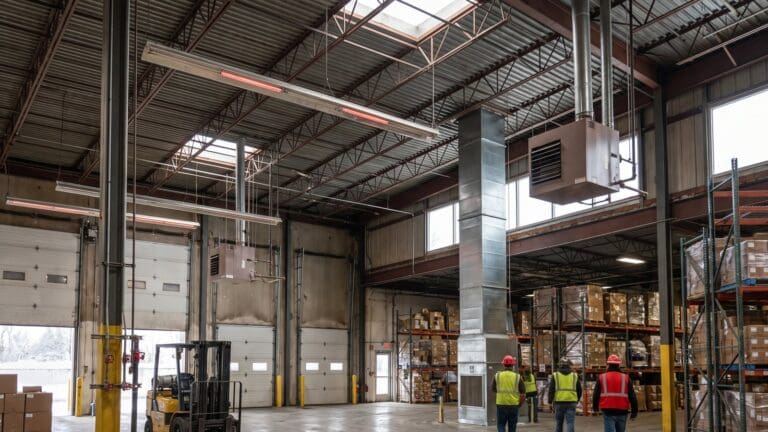
Warehouse Heating in Ohio: Unit Heaters, Infrared and Make-Up Air
A plant engineer's guide to choosing between unit heaters, radiant tube heaters, destratification fans and make-up air, and to balancing exhaust so the building stops fighting its own heat.
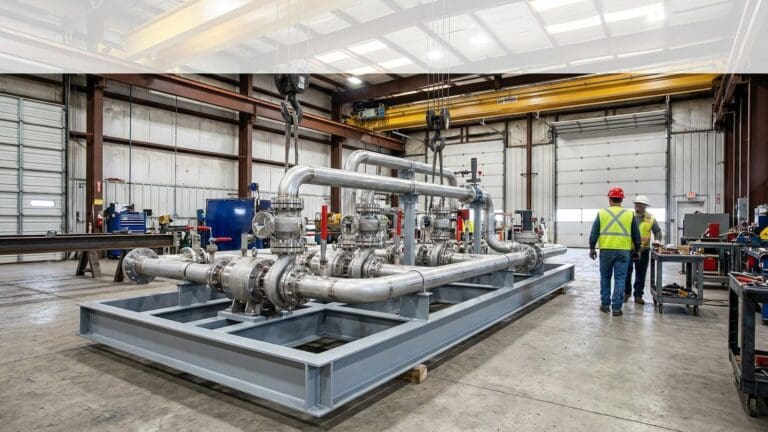
Prefabricated Piping Skids: Faster Installs, Cleaner Welds
Prefabricated piping skids move the slow, inspection-heavy work off your production floor and into a controlled shop. Here is how Northern Ohio plants scope, test, rig, and tie in a modular process assembly without losing production time.
Chemical Plant Piping: Materials, ASME B31.3, and Cleanliness
How ASME B31.3 fluid service categories, material selection, and contamination control decisions shape process piping in chemical and paint plants, plus what Northern Ohio winters and Ohio EPA air permits add to the job.
Need this handled at your facility?
Wilkes engineers, fabricates, and installs process piping, plumbing, and HVAC systems across Ohio.