Winterizing Commercial Plumbing and Heating in Northern Ohio
Winterizing commercial plumbing and heating systems in Northern Ohio means insulating and heat tracing exposed pipe, testing boiler safeties and glycol percentage before the first hard freeze, protecting backflow preventers and sprinkler lines from ice damage, and having a written plan for a deep freeze. Done correctly, this work finishes before Halloween, not during the first cold snap. This guide is for facility managers, plant engineers, school officials, and hospital facilities teams along the Lake Erie snowbelt, from Huron and Sandusky to Norwalk, Port Clinton, Vermilion, Lorain, and Fremont.
The lake changes the math. Lake-effect snow bands can drop several inches an hour on one side of a county while the next town stays dry, and shoreline temperatures can swing 15 to 20 degrees in a single afternoon. The National Weather Service office in Cleveland tracks these patterns for the Ohio shoreline, and its freeze warnings are the trigger most facility teams use to start their cold weather checklist, not the calendar date.
Key takeaways
- Exterior hose bibbs, sprinkler and fire lines in unheated space, roof drains, dead legs, rooftop unit condensate lines, and gas trains are the systems that freeze first in Ohio buildings.
- Heat tracing and insulation only work if they are inspected and powered before the first freeze, not installed once and forgotten.
- A pre-season boiler and hydronic check should cover combustion, safety controls, glycol percentage, expansion tank pressure, and air removal.
- Backflow preventers need a freeze protection plan, since a cracked check valve during a cold snap can shut down a building’s water service.
- A written deep freeze procedure and a dated fall checklist turn a stressful emergency into a routine task.
What Freezes First in a Commercial Building During a Northern Ohio Winter?
Frozen pipe calls follow a predictable order. Exterior hose bibbs go first, usually within 24 hours of a hard freeze, since they sit outside the building envelope with no heat source. Sprinkler and fire lines in unheated garages, docks, and mezzanines are close behind, and a frozen or burst dry pipe riser can leave a building without the fire protection required under NFPA 13.
Roof drains and overflow scuppers freeze from the outside in, and a blocked drain during a thaw and refreeze cycle can back water up under a roof membrane. Unheated mechanical rooms, especially in additions or older wings, are a recurring problem for schools and manufacturing buildings across Erie and Huron counties.
The Piping Facility Teams Forget
Dead legs, the short sections of pipe that dead end at a capped valve or a removed fixture, freeze even in heated buildings because there is no flow to carry heat through them. Rooftop unit condensate lines freeze solid overnight and trip the unit offline, and gas trains and regulators exposed on a roof or exterior wall can ice over and restrict gas flow right when the building needs heat most.
| System or Location | Why It Freezes | The Fix |
|---|---|---|
| Exterior hose bibbs | No heat source, direct outside exposure | Frost-free design, or shut off and drain |
| Sprinkler and fire lines in unheated space | Wet pipe below 40 F in a garage or dock | Convert to dry, or add heat trace per NFPA 13 |
| Roof drains and scuppers | Standing water freezes in a thaw and refreeze cycle | Heat trace the drain bowl, clear debris in fall |
| Unheated mechanical rooms | Additions or old wings never fully conditioned | Add heat, repair the building envelope |
| Dead legs | No flow to carry heat through the pipe | Cap and drain, or remove the branch |
| Rooftop unit condensate lines | Small pipe, full exposure on the roof | Heat trace the full run, slope for drainage |
| Gas trains and regulators | Exposed to roof or wall moisture and ice | Protect vents, heat trace per manufacturer |
| Backflow preventers | Outdoors or in unheated vaults | Climate-rated enclosure, heat trace the assembly |
How Do Heat Tracing, Insulation, and Low Temperature Alarms Prevent Frozen Pipes?
Heat trace cable and pipe insulation work together, not as substitutes for each other. Insulation slows heat loss; it does not add heat, so any pipe in an unheated or marginally heated space still needs a heat source once the space can drop below freezing. Self-regulating electric heat trace, controlled by a thermostat or an ambient sensor, is the standard fix for exposed piping, roof penetrations, and the last few feet before an exterior hose bibb or a rooftop condensate line.
Every heat trace circuit needs a way to prove it is working. A low-temperature alarm tied into the building automation system, or a standalone monitored sensor, gives staff a warning hours before a pipe splits instead of finding out from a flooded ceiling tile. Ohio Administrative Code Chapter 3745-95, which governs public water system operation, does not set a heat trace standard directly, but its integrity provisions are one reason Ohio EPA expects water systems to stay above freezing and under positive pressure through winter. Wilkes crews check Chapter 3745-95 against a client’s water system classification whenever freeze protection intersects backflow assemblies.
Where Insulation Alone Falls Short
Insulation without heat trace still works in interior chases, above ceilings, and in mechanical rooms that stay above 40 F on the coldest design day. The distinction is whether the space can ever see sustained temperatures near or below freezing. If it can, insulation buys time during a short cold snap but will not carry the pipe through a multi-day arctic outbreak, which the Lake Erie corridor sees most winters.
What Boiler and Hydronic Checks Should You Complete Before Heating Season?
A pre-season boiler inspection is not the same as an annual service call scheduled whenever a technician has an opening. It should happen before the first cold snap, while there is time to order a part without cutting heat to occupied space; this is routine work under our commercial plumbing and HVAC service calls each fall. Combustion testing confirms the burner is firing at the correct fuel to air ratio: a boiler running rich wastes fuel, and one running lean risks flame instability and shutdowns on the coldest morning of the year.
Safety controls, including low water cutoffs, high limit controls, and pressure relief valves, need testing under actual operating conditions, not just a visual check. ASME B31.9, the code covering building services piping, and the requirements enforced through Ohio’s boiler program at the Department of Commerce both assume these controls are functioning. A boiler flagging repeated safety trips or needing major parts every season may be worth weighing against our guide to boiler repair or replacement.
Glycol, Expansion Tanks, and Air
On closed hydronic loops that use glycol for freeze protection, check the actual percentage with a refractometer rather than trusting the original fill sheet. Glycol degrades and gets diluted by makeup water over years, and a loop reading 15 percent glycol when it was designed for 30 percent will freeze at a much higher outdoor temperature than expected. Expansion tank pre-charge pressure and air separation belong on the fall list too, since a waterlogged tank or trapped air mimics a freeze problem even when water temperature is fine.
Wilkes replaced the aging heating plant at South Central High School with new piping, pumps, and a modern hydronic system, part of a broader upgrade that also added a chilled water system and air conditioning. A school heating plant of that age is a common case in Northern Ohio: controls and safeties that were manageable for years become a real winter risk once a hard freeze exposes the weak point.
How Do You Protect Backflow Preventers and Fire Sprinkler Lines From Freezing?
A backflow preventer that freezes and cracks does more than create a leak. Because it sits on the domestic or fire water supply, a failed assembly can shut off water service to part or all of a building until it is replaced and retested. Ohio EPA’s backflow prevention program requires testable assemblies on most commercial water services, and most Ohio water systems require annual testing on top of that, so a frozen assembly is both a maintenance failure and a compliance gap. Our guide on backflow testing in Ohio covers who needs a testable assembly.
Assemblies installed outdoors or in unheated vaults need insulated enclosures rated for the local climate, not a tarp or loose insulation stuffed around the device. Indoor assemblies in unheated rooms or dock vestibules need the same heat trace and alarm treatment as any other exposed pipe.
Sprinkler systems add a second layer of risk. Wet systems in heated space are generally safe above 40 F, but dry systems and any wet piping running through an unheated garage, cooler, or freezer need checking every fall. NFPA 13, the standard governing sprinkler installation, sets minimum temperatures for wet pipe areas because freeze failures are a recurring cause of water damage claims. A dry system that will not hold air pressure is often the first sign of a fitting about to fail; Wilkes treats a failed air test the same as a leak.
Rule of thumb: if a pipe run passes within 3 ft of an exterior wall, crosses an unheated space, or sits above a dock door that gets left open, treat it as freeze risk and insulate or heat trace it, even if it has never frozen before. One cold night with a door propped open is enough to catch a pipe that has been fine for 10 winters.
What Should Your Team Do During a Deep Freeze Warning?
Most freeze failures happen in the first 24 to 48 hours of a sudden temperature drop, before insulation and building mass catch up to outdoor conditions. When the National Weather Service issues a freeze warning for the Cleveland forecast area, a facility team’s job is to confirm the protections already in place are working, not to start installing them.
Walk exterior hose bibbs and confirm they are shut off and drained if not in active use. Confirm heat trace circuits are energized and pulling current, not just plugged in, since a tripped GFCI or a failed thermostat can leave a circuit dead for weeks without anyone noticing. Check that overhead doors near unheated piping stay closed, and that any staged temporary heaters are fueled and ready.
Watch rooftop condensate lines and low-temperature alarms through the worst of the cold snap, and have a plan for who gets called first if an alarm trips overnight. A short list of two or three names and current phone numbers, posted at the building engineer’s desk, is more useful during a 2 a.m. alarm than a fully documented plan nobody can find.
What Do You Do Immediately After a Pipe Bursts?
Shut off water at the nearest isolation valve rather than the main, if the building has zone valves. Cutting water at the main takes down service to the whole building and creates a second problem while the first one is still being fixed.
Cut power to any electrical equipment in the flooded area before anyone enters standing water, and get portable extraction and drying equipment running as soon as the leak is stopped. Water that sits more than 24 to 48 hours in a Northern Ohio winter, with cool indoor temperatures and low ventilation, creates conditions for mold growth that cost far more than the original leak.
Document the failure with photos before repairs start, both for insurance and to identify whether the cause was missing insulation or a tripped heat trace circuit. A burst pipe is rarely bad luck; it is almost always a specific gap in the freeze protection plan, and finding that gap keeps it from happening again next winter.
What Belongs on a Fall Winterization Checklist for Ohio Facilities?
A written checklist with target dates keeps winterization from depending on one person’s memory. Northern Ohio’s first hard freeze typically arrives in late October to mid-November, though lake-effect cold snaps have hit the shoreline counties as early as the first week of October.
- Early September: schedule the boiler and hydronic inspection, including combustion testing, safety control testing, and glycol checks, while service crews still have open calendar time.
- Mid-September: test and document backflow preventer assemblies for the season, and confirm insulated enclosures on outdoor units are in good condition.
- Late September: inspect and test heat trace circuits and low-temperature alarms end to end, including any added or moved during summer work.
- Early October: walk the roof to clear drains and scuppers, check dry sprinkler air pressure, and confirm rooftop condensate lines have heat trace or drain to a heated space.
- Mid-October: shut off and drain exterior hose bibbs and any seasonal outdoor piping not needed through winter.
- Ongoing through winter: recheck the list after any extended cold snap, and after any building change that creates a new dead leg or freeze exposure.
Pair this checklist with the commercial plumbing preventive maintenance checklist so winterization is not a separate program from routine upkeep. For schools running hydronic systems, our guide to hydronic heating systems for schools covers timing bigger equipment work around the academic calendar.
Frequently asked questions
How cold does it have to get before commercial pipes freeze?
A pipe with still water and no insulation can begin forming ice within hours once air temperature drops below 20 F, faster in a direct draft. Moving water resists freezing longer, which is why dead legs and low-flow branch lines often fail first even in a building that stays reasonably warm.
Should a sprinkler system be drained for winter in Ohio?
Wet pipe systems in heated space generally do not need draining, since the goal is keeping the space above 40 F. Dry systems and wet piping running through unheated areas like docks or garages need a fall inspection under NFPA 13 guidelines, and a system that will not hold air pressure should be repaired before cold weather arrives.
What temperature should an unheated mechanical room stay above?
Most facility teams target at least 40 F in any space housing water filled piping or equipment, with a bigger margin if the room has exterior walls or a garage door. Below that, insulation alone will not carry a pipe through a multi-day cold snap, and a heat source becomes necessary.
How often do backflow preventers need to be tested in Ohio?
Most Ohio water systems require annual testing on backflow prevention assemblies serving commercial buildings, with additional testing after any repair, relocation, or freeze event that could have damaged internal components. Your local water system or the Ohio EPA backflow prevention program can confirm the exact schedule.
How can facility staff tell a heat trace circuit has failed?
A monitored low-temperature alarm is the most reliable method, since it flags a cold pipe before it freezes rather than after. Where alarms are not installed, staff should physically confirm current draw or warmth along the cable during a deep freeze, because a tripped breaker can leave a circuit dead for weeks with no visible sign.
Talk to Wilkes about your project
Before a first conversation about winterizing your building, it helps to know the layout: which areas run unheated in winter, whether you have a hydronic or steam heating plant, whether backflow assemblies sit indoors or in an outdoor vault, and any pipe or fixture that has frozen before. You do not need drawings or a formal survey; a walk-through with whoever knows the building best is enough.
Wilkes Plumbing & Heating serves Huron, Sandusky, Norwalk, Port Clinton, Vermilion, Lorain, Fremont, and the surrounding counties from our office in Huron. Call (419) 433-2325, or request a quote to schedule a pre-season inspection before the next cold snap.
Keep reading
Commercial Boiler Maintenance: Checklist, Tune-Up and Ohio Rules
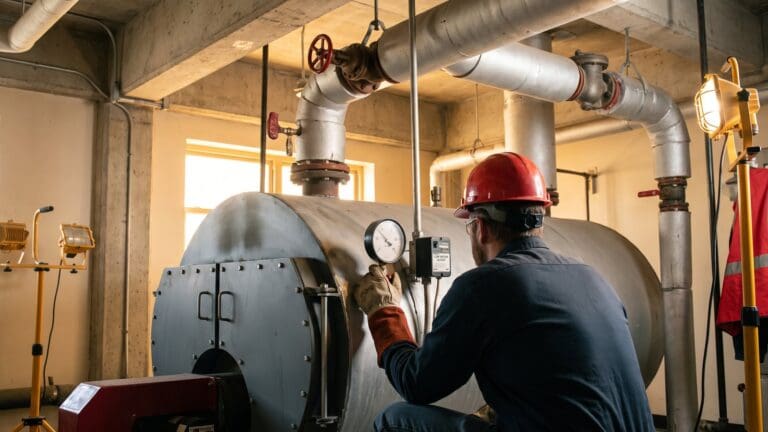
A frequency-by-frequency maintenance plan for commercial steam and hot water boilers, from the daily log to the annual combustion report, built around Ohio's inspection cycle.
Medical Gas Piping: What Hospitals Need From a Contractor
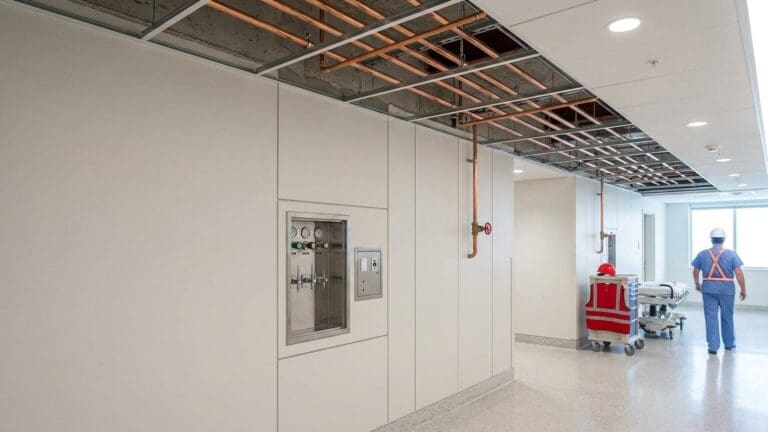
Medical gas is a life safety system, not a utility. Here is what NFPA 99 verification, ASSE 6010 certification, and occupied-hospital work actually require from a mechanical contractor in Northern Ohio.

Legionella Water Management Plans: ASHRAE 188 in Ohio
ASHRAE 188 sets the framework for a Legionella water management plan in hospitals and large buildings. Here is what Ohio facility teams need to know to build and maintain one.
Need this handled at your facility?
Wilkes engineers, fabricates, and installs process piping, plumbing, and HVAC systems across Ohio.