Medical Gas Piping Contractor Ohio Hospitals and Clinics
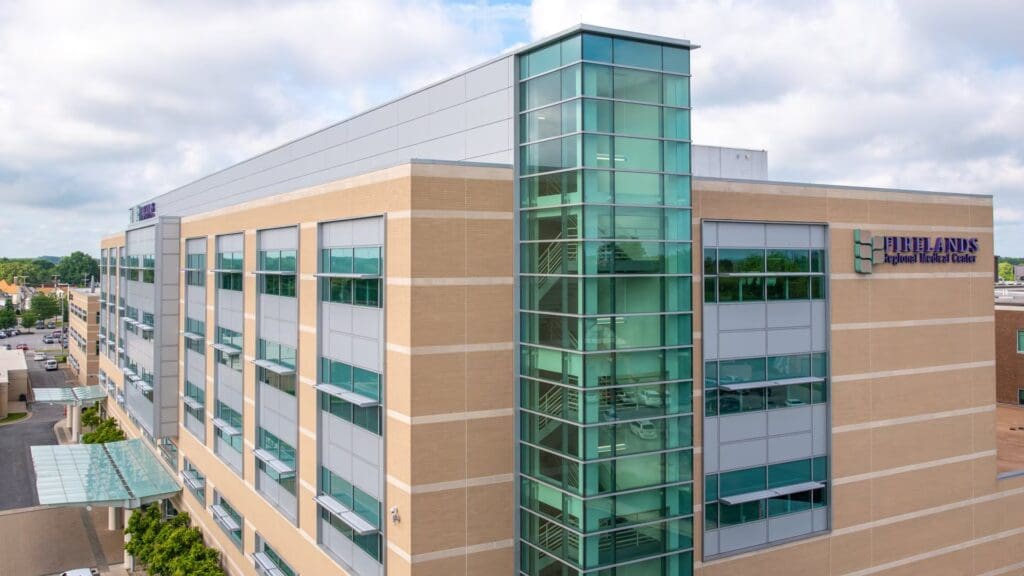
Our shop is in Huron, and most of the health care work we do sits within an hour of it, in Erie, Huron, Lorain, Ottawa and Sandusky counties. Wilkes has performed mechanical work at Firelands Regional Medical Center in Sandusky. Every piped gas job is built to NFPA 99, brazed under a nitrogen purge, and documented so the independent verifier and the local building official get what they need the first time.
Most of this work is not a new building. It is a change inside a running department, on a shutdown window that has to hold.
What our medical gas crews handle
- NFPA 99 piped gas systems
- Oxygen, nitrous oxide, medical air
- Medical vacuum and WAGD lines
- Brazed Type L copper tube
- Alterations in occupied departments
- Records for independent verification
Medical gas systems and facilities we serve
Systems we install and alter
- Oxygen mains, risers and zones
- Nitrous oxide and nitrogen piping
- Medical air and instrument air
- Medical vacuum and WAGD
- Zone valve boxes and alarm panels
- Bulk and manifold source equipment
Facilities we work in
- Hospitals and regional medical centers
- Ambulatory surgery centers
- Clinics and physician offices
- Dental and oral surgery suites
- Research and clinical laboratories
- Long term care and rehabilitation
What does NFPA 99 require of a medical gas installation?
Piped medical gas and vacuum systems are built to the NFPA 99 Health Care Facilities Code, which governs the system from the source equipment through the outlet at the patient bed. The code sets the tube, the joining method, the test sequence and the qualification of the people doing the work. It is not a document you satisfy at the end of a job. It decides how the first joint gets brazed.
In the field, NFPA 99 medical gas piping means hard drawn Type L copper medical gas tube, cleaned and capped for oxygen service, brazed with a continuous purge of oil free dry nitrogen so no copper oxide forms inside the line. Brazing procedures and brazers are qualified against the requirements the code draws from the ASME Boiler and Pressure Vessel Code, Section IX. The code also requires that the people installing the piping hold the medical gas installer qualification described in the ASSE Series 6000 personnel standards, and that whoever verifies the finished system is independent of the installing contractor. Gas identification, cylinder connections and bulk source equipment follow the standards published by the Compressed Gas Association, which is why a fitting that looks close is still the wrong fitting.
How do you choose a medical gas piping contractor Ohio hospitals can schedule around?
Start with the qualifications, because here they are not a preference. Ask who is brazing, ask to see the brazing procedure and the purge practice, and ask who holds the installer qualification. Then ask how the outage gets planned: which zone valves close, who signs the shutdown, how long the department is down, and what the crew does if the tie in does not match the drawing.
Then ask about the paperwork. An experienced hospital piping contractor arrives with material certifications, installer test records, purge logs and marked up drawings ready to hand the verifier. Our commercial plumbing and HVAC group treats that record as part of the deliverable on every health care project we run, and our guide to health care plumbing and medical gas walks through what a facility should expect to receive at closeout.
How are medical gas system alterations handled in an occupied building?
Most medical gas system alterations happen while the floor above and the floor below are still treating patients. The sequence matters more than the pipe. We walk the existing system first, confirm what each zone valve actually isolates rather than what the as builts claim, and set the outage against the department schedule instead of ours.
- Verify isolation, then tag and lock the affected zone
- Coordinate infection control barriers and negative air with the facility
- Braze offline where possible, then make short, purged field tie ins
- Pressure test, blow down and cross connection test before the zone is returned
- Turn over records the same week, not at the end of the project
Prefabrication does most of the work here. Spools built and pressure tested in our shop shorten the time a torch is lit in a corridor, the same approach we use on industrial process piping and high purity lines. Where a system is being extended rather than repaired, our design build group can carry the layout, the source sizing and the permit set.
Who verifies a new medical gas system before it is put in service?
NFPA 99 splits the testing in two. The installer performs the initial pressure, cross connection and standing pressure tests and documents them. A separate party, qualified under the ASSE Series 6000 verifier standard and independent of the installer, then performs the verification: cross connection, valve and alarm operation, outlet flow and pressure, particulate, purity and the final source check. We schedule the verifier early, build to what that scope will look for, and stay on site while it runs so any finding is corrected the same day.
Plan approval and inspection sit with the local building department under the rules adopted by the Ohio Board of Building Standards. Room layout, outlet counts and clearances are usually driven by the design guidance in the FGI Guidelines that the facility and its architect are working from.
What do Northern Ohio winters change about medical gas equipment?
Lake Erie weather shows up in the source yard. Bulk oxygen vaporizers ice and need their defrost cycle and clearances respected, medical air intakes have to stay clear of drifting snow and exhaust, and dryers and receivers in an unheated equipment yard behave differently in February than they did at startup in July. Freeze thaw at the shoreline is also why we look hard at penetrations, hangers and pitch on any exterior run.
We work throughout Erie, Huron, Lorain, Ottawa and Sandusky counties, including Sandusky, and Wilkes has performed mechanical work at Firelands Regional Medical Center.
Talk to Wilkes about medical gas piping in your facility
Send us the drawings, the outage window, or just the problem you are looking at. Call (419) 433-2325, or request a quote. Our office at 205 Sprowl Rd in Huron is open Monday to Friday, 8:00 AM to 4:00 PM.
Frequently asked questions
Does Wilkes work on medical gas systems in occupied hospitals?
Yes. Most of our medical gas work is an alteration or extension inside a building that is still treating patients. We plan the outage around the department schedule, confirm what each zone valve actually isolates, coordinate infection control barriers with the facility, and prefabricate as much of the assembly as possible so field brazing time in an occupied corridor stays short.
What code governs medical gas piping in Ohio?
Piped medical gas and vacuum systems are built to NFPA 99, the Health Care Facilities Code, which covers materials, brazing, testing and personnel qualification. Plan review and inspection are handled by the local building department under the rules adopted by the Ohio Board of Building Standards, and the facility design usually follows the FGI Guidelines as well.
Why does medical gas tube have to be brazed under nitrogen?
Brazing copper with a torch and no purge forms copper oxide scale inside the tube. That scale breaks loose later and travels toward outlets, filters and patient devices. NFPA 99 requires a continuous purge of oil free dry nitrogen through the line during brazing so the inside surface stays clean and no particulate is built into the system.
Can the contractor that installs the system also verify it?
No. NFPA 99 requires that the party performing verification be qualified under the ASSE Series 6000 verifier standard and independent of the installing contractor. The installer performs and documents the initial pressure, cross connection and standing pressure tests, and the independent verifier then runs the full verification before the system is placed in service.
What areas of Ohio does Wilkes cover for medical gas work?
We work from our shop in Huron across Erie, Huron, Lorain, Ottawa and Sandusky counties, including Sandusky, Norwalk, Port Clinton, Vermilion, Lorain and Fremont, and we take projects elsewhere in Ohio. Call (419) 433-2325 with the site address and the scope and we will tell you plainly whether it is a good fit.
Where we work. Our brazers and pipefitters work out of Huron, Ohio. Day-to-day plumbing and HVAC service covers Erie, Huron, Lorain, Ottawa, and Sandusky counties. Medical gas work is project work and is not limited to that footprint – we take medical gas installation, repair, and certification support across Ohio. See our service areas, or call (419) 433-2325 with the facility and the gases involved.
Request a medical gas piping quote
Medical gas piping
Wilkes Family of Companies